There are places in Kyoto that demand your attention with sheer scale and golden splendor. And then there are places that simply ask you to slow down, to breathe, and to listen. The Philosopher’s Path, or Tetsugaku no Michi (哲学の道) in Japanese, is firmly in the latter camp.
It doesn't sound like much on paper: a two-kilometer stone path that follows a narrow canal through a quiet residential neighborhood. It connects two of Kyoto’s great temples, Ginkaku-ji (The Silver Pavilion) in the north and the vast Nanzenji Temple complex to the south. But to call it just a walkway is to miss the point entirely.
This path has a soul. It earned its name from Nishida Kitaro, one of Japan's most significant modern philosophers, who made this his route for daily walking meditation in the early 20th century. And when you walk it, you understand why. The gentle murmur of the canal, the canopy of trees overhead, and the constant invitations to detour into quiet temple grounds all conspire to pull you out of your head and into the present moment. It’s a slow-motion immersion into the very essence of Kyoto.
The Path for All Seasons
Let’s get one thing straight: while the Philosopher’s Path is world-famous for its cherry blossoms, its beauty is not a one-week affair. This is a place that wears every season with a unique and profound grace.
Spring: This is the season of spectacle. Hundreds of cherry trees lining the canal explode into a tunnel of pale pink and white. The air feels electric. Petals drift down like snow, carpeting the path and the water in a breathtaking display of mono no aware, that is, the gentle, bittersweet awareness of life’s transient beauty. It’s crowded, yes, but for good reason. It’s one of the most iconic sakura viewing spots in Japan.
Summer: The energy shifts from explosive to serene. The cherry trees form a lush, green canopy, offering a cool, shaded respite from Kyoto’s humid heat. The soundtrack is the drone of cicadas and the constant whisper of the canal. If you linger until dusk, you might be rewarded with a truly enchanting experience of fireflies dancing over the water.
Autumn: The path ignites in a different way. The fiery reds and golds of maple leaves stand in sharp contrast to the evergreen foliage, their colors reflected in the slow-moving water below. The air is crisp, the light is golden, and the crowds are thinner than in spring, offering a more contemplative beauty.
Winter: This might be the most philosophical season of all. The trees are bare, their stark, elegant branches forming intricate silhouettes against the sky. The silence is deeper. The path is nearly empty. A light dusting of snow transforms the scene into a monochrome ink wash painting, revealing the "skeleton" (骨格) of the landscape.
Anchors of Contemplation: Three Temples on the Path
The walk itself is the main event, but the temples along the way are the anchors that ground the experience in centuries of art, faith, and philosophy. While dozens of small shrines and temples dot the route, three in particular define its character.
Ginkaku-ji: The Understated Masterpiece
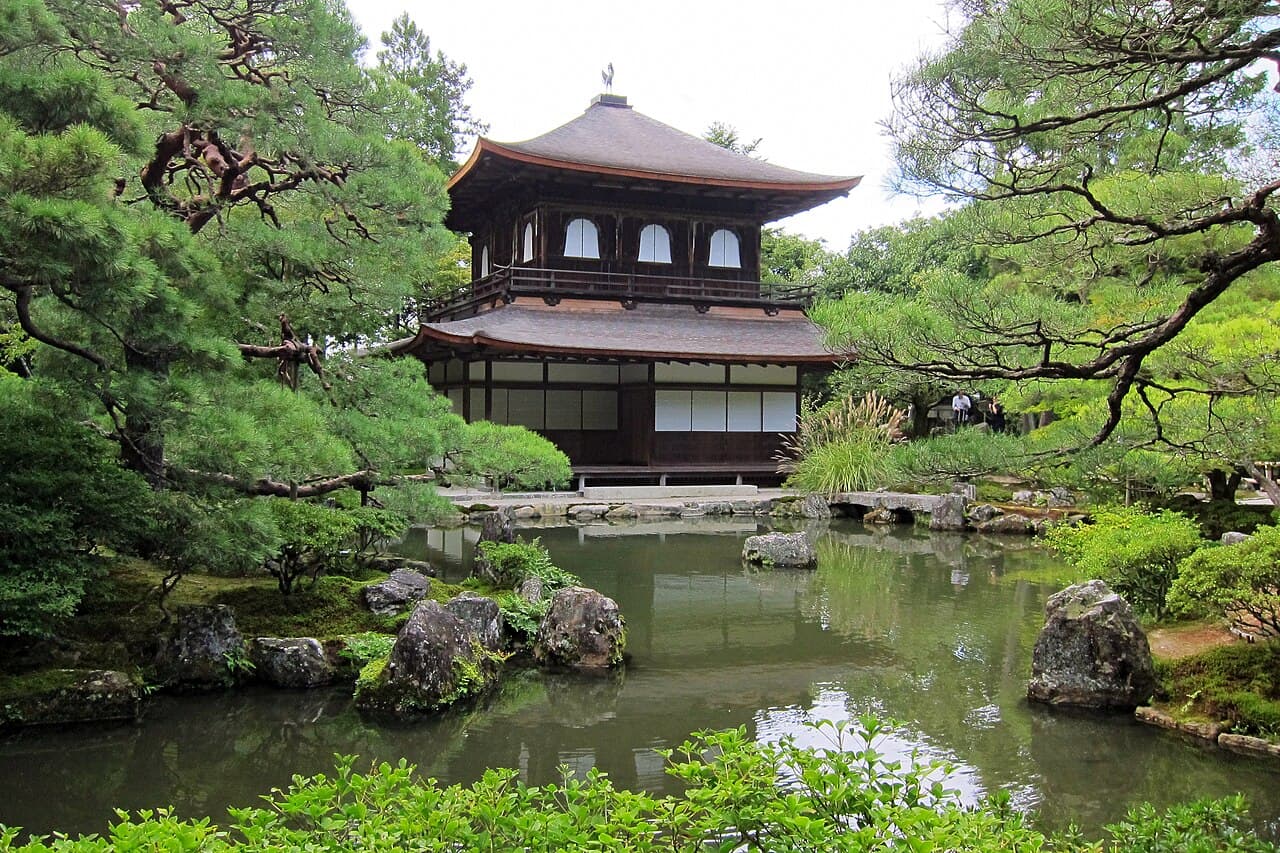
Your journey will likely begin or end at the foot of the Higashiyama mountains at Ginkaku-ji, the "Silver Pavilion." Don't let the name fool you. Unlike its gilded cousin, Kinkaku-ji, this pavilion was never actually covered in silver. Its founder, the Shogun Ashikaga Yoshimasa, was a patron of the arts who retreated here in the 15th century to escape a war-torn country. His vision was not of opulent display, but of refined, subtle beauty.
Loading listing...
What he created is a masterclass in the aesthetic of wabi-sabi. The dark, weathered wood of the pavilion feels humble and perfectly attuned to its natural surroundings. But the real showstoppers are the gardens. A vast cone of white sand, the Kōgetsudai or "Moon Viewing Platform," sits next to a sea of meticulously raked gravel, the Ginsadan. These abstract forms are stunning, transforming the garden into a minimalist sculpture. A winding path then takes you up through a lush moss garden, offering perfectly framed views of the pavilion and the city beyond. Ginkaku-ji sets the perfect tone for the walk ahead: quiet, contemplative, and deeply beautiful.
Hōnen-in: The Secret Sanctuary
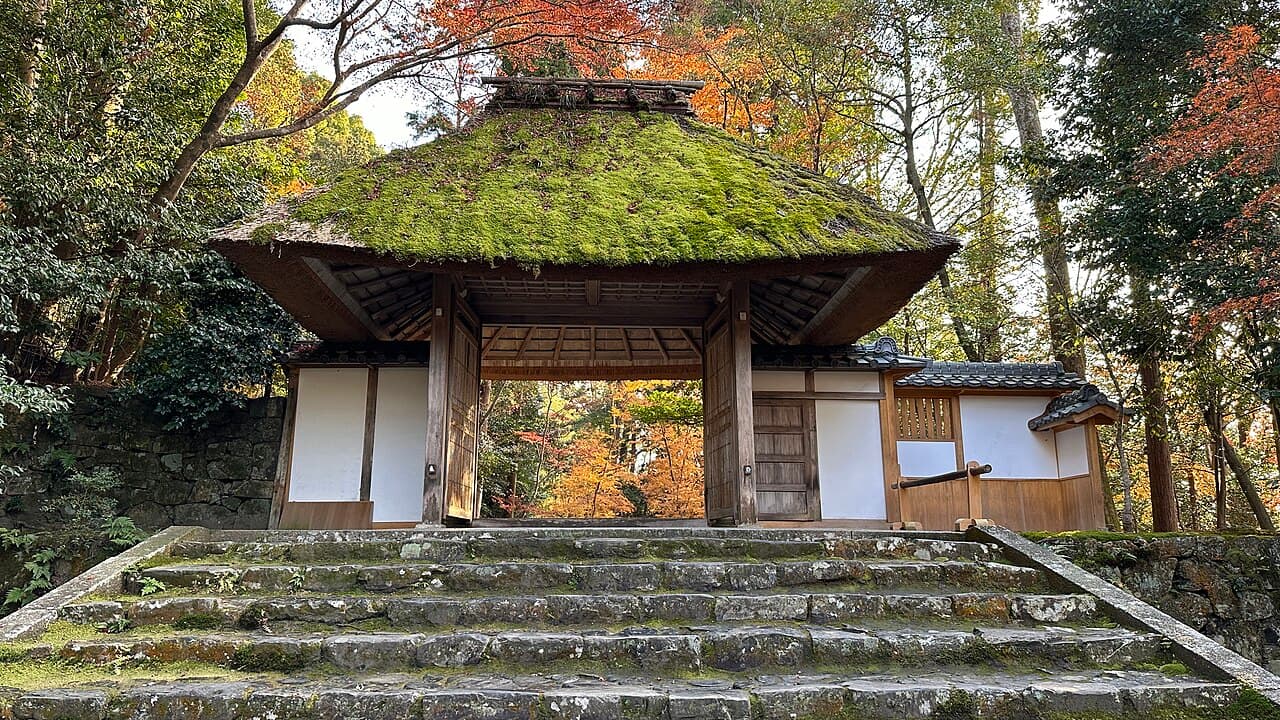
Just a short detour from the main path, tucked away behind a humble thatched-roof gate, is Hōnen-in. This small, independent temple is a true hidden gem and an essential stop. It offers an immediate sense of peace that feels worlds away from the grander, more crowded temples.
Loading listing...
Upon entering, you are greeted by two striking mounds of white sand, each with intricate patterns raked into its surface. These byakusadan are meant to purify the heart and mind of all who pass between them. Beyond them lies a tranquil moss garden, shaded by maple trees and surrounding a small pond. The main hall is rarely open, but that doesn't matter. The magic of Hōnen-in is in its atmosphere. It’s a place that feels deeply spiritual and alive, occasionally hosting contemporary art exhibits or concerts that create a fascinating dialogue between the ancient and the modern. It’s a perfect place to sit, to listen, and to absorb the profound quiet.
Nanzen-ji: The Grand Finale
As you approach the southern end of the path, the scale shifts dramatically. You enter the sprawling complex of Nanzen-ji, one of the most important Zen temples in all of Japan. Its history is immense, and its grounds are vast, containing a dozen sub-temples, each with its own treasures.
Loading listing...
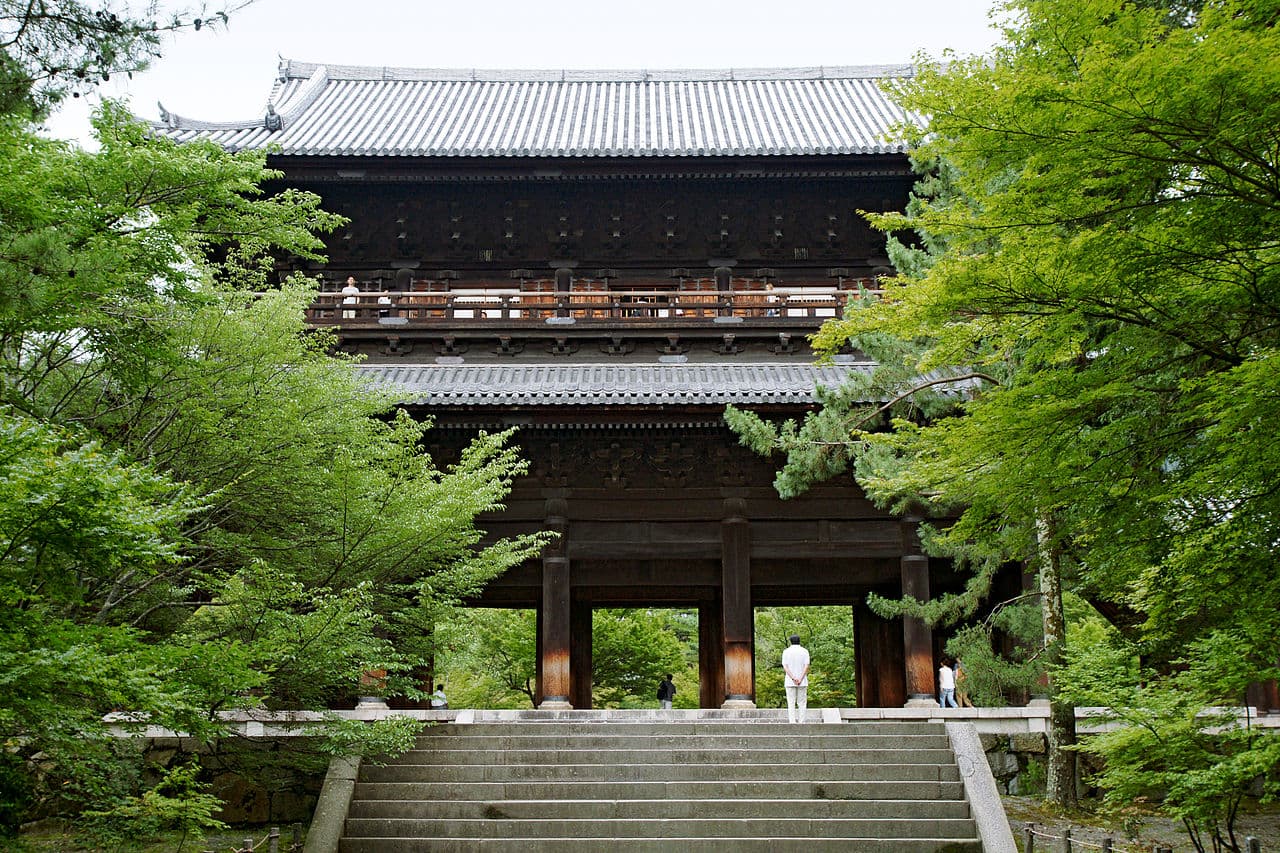
The first thing you’ll notice is the colossal Sanmon gate. You can pay a small fee to climb to the top, and you absolutely should. The view over the temple rooftops and across the city is spectacular. But the most surreal and iconic feature of Nanzen-ji lies just beyond: a massive, red-brick aqueduct.
Built during the Meiji Restoration in the late 19th century, this structure was part of the ambitious project to bring water from Lake Biwa into the city. Its soaring Romanesque arches cut right through the ancient temple grounds. The juxtaposition is jarring, strange, and somehow perfectly Kyoto. It’s a powerful symbol of Japan’s ability to hold its deep past and its modernizing ambition in the same frame. It’s a wonderful, thought-provoking puzzle to contemplate as you conclude your walk.
The Art of the Walk
The Philosopher's Path is not a race. A brisk walk from end to end takes about 30 minutes, but you'd be missing everything. The real joy is in giving it a full morning or afternoon. Stop for coffee at one of the small, charming cafes along the canal. Browse the tiny craft shops. Pop into the smaller shrines you pass along the way.
The path teaches you that the detours are the destination. It asks you to adopt a different rhythm, one that is in sync with the flowing water beside you. In our frantic, goal-oriented world, a walk with no purpose other than the walk itself feels like a radical act. And perhaps that’s the most profound philosophical lesson of all. It’s not about finding an answer at the end of the path, but about discovering a better way to ask the questions along the way.