Kyoto is often painted in the soft watercolors of cherry blossoms and geisha, a city of quiet prayer and timeless tradition. But scratch the surface of its most serene temples, and you will find the scars of a much more violent reality. For over a millennium, this city was the chessboard upon which Japan’s most ruthless warlords, the Shoguns and the Daimyō, played out their games of domination.
The temples you visit today were rarely built solely for spiritual enlightenment. They were fortresses disguised as sanctuaries, monuments to colossal egos, retirement villas for exhausted rulers, and somber memorials for fallen armies. They are the physical legacy of the men who seized Japan by the sword.
To understand Kyoto, one must understand the Shoguns. From the gold-leafed excess of the Ashikaga clan to the fiery betrayal of Oda Nobunaga and the iron-fisted peace of the Tokugawa, the history of Japan’s military rulers is written in the timber and stone of Kyoto’s sacred spaces.
The Ashikaga Legacy: Gold, Silver, and Chaos
Long before the unification of Japan, the Ashikaga shogunate ruled from the Muromachi district of Kyoto (1336–1573). This was an era of paradox: a time of relentless civil war and political instability, yet also the golden age of Japanese art, tea culture, and Zen aesthetics. The Ashikaga shoguns treated Kyoto as their personal canvas. Their retirement villas, later converted into Zen temples, remain the city's most iconic landmarks.
Kinkaku-ji (The Golden Pavilion)
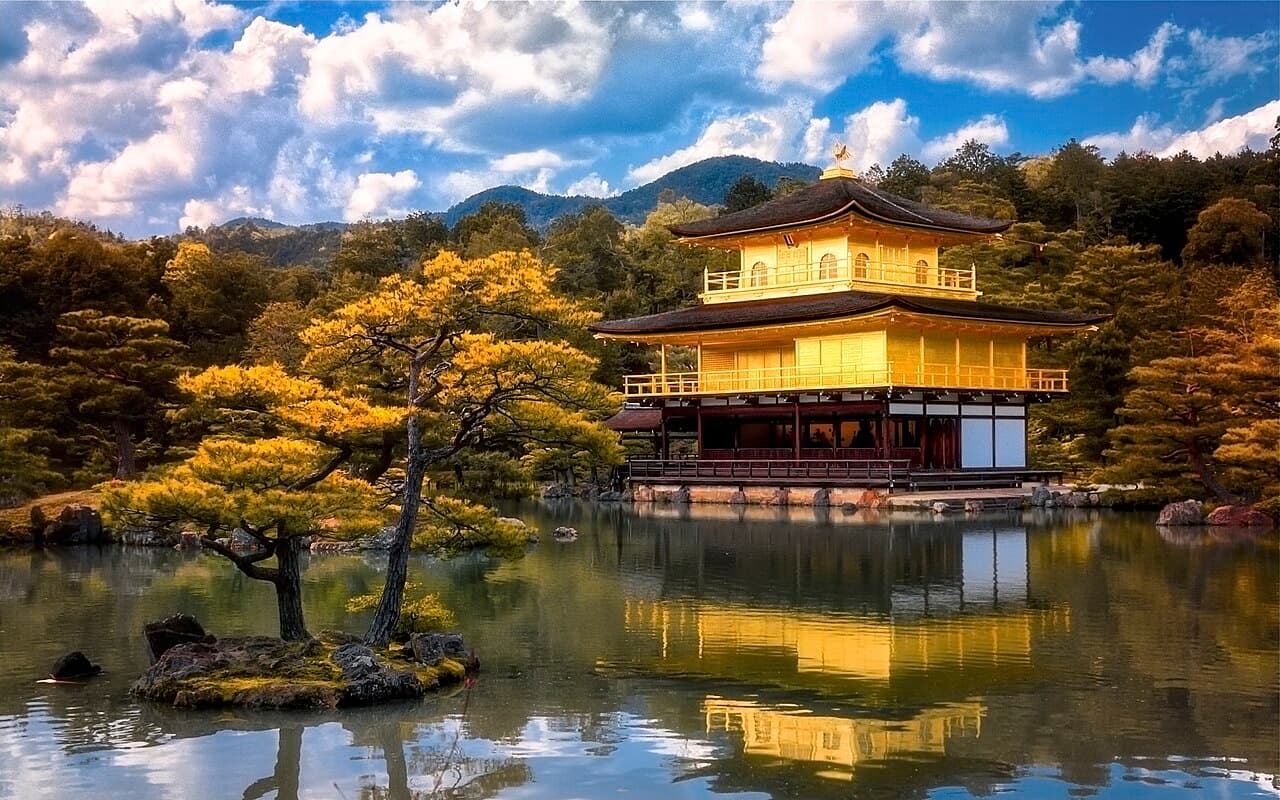
There is no subtle way to interpret Kinkaku-ji. Covered in real gold leaf, it reflects dazzlingly into the Mirror Pond, a sight that was intended to awe visitors into submission. Built in 1397 by the third shogun, Ashikaga Yoshimitsu, it was originally a lavish retirement villa. Yoshimitsu was a man who successfully united the Northern and Southern imperial courts and reopened trade with China. The pavilion is a physical manifestation of his political power and his affinity for Chinese culture. It is a monument to the Kitayama culture: ostentatious, confident, and grand.
Loading listing...
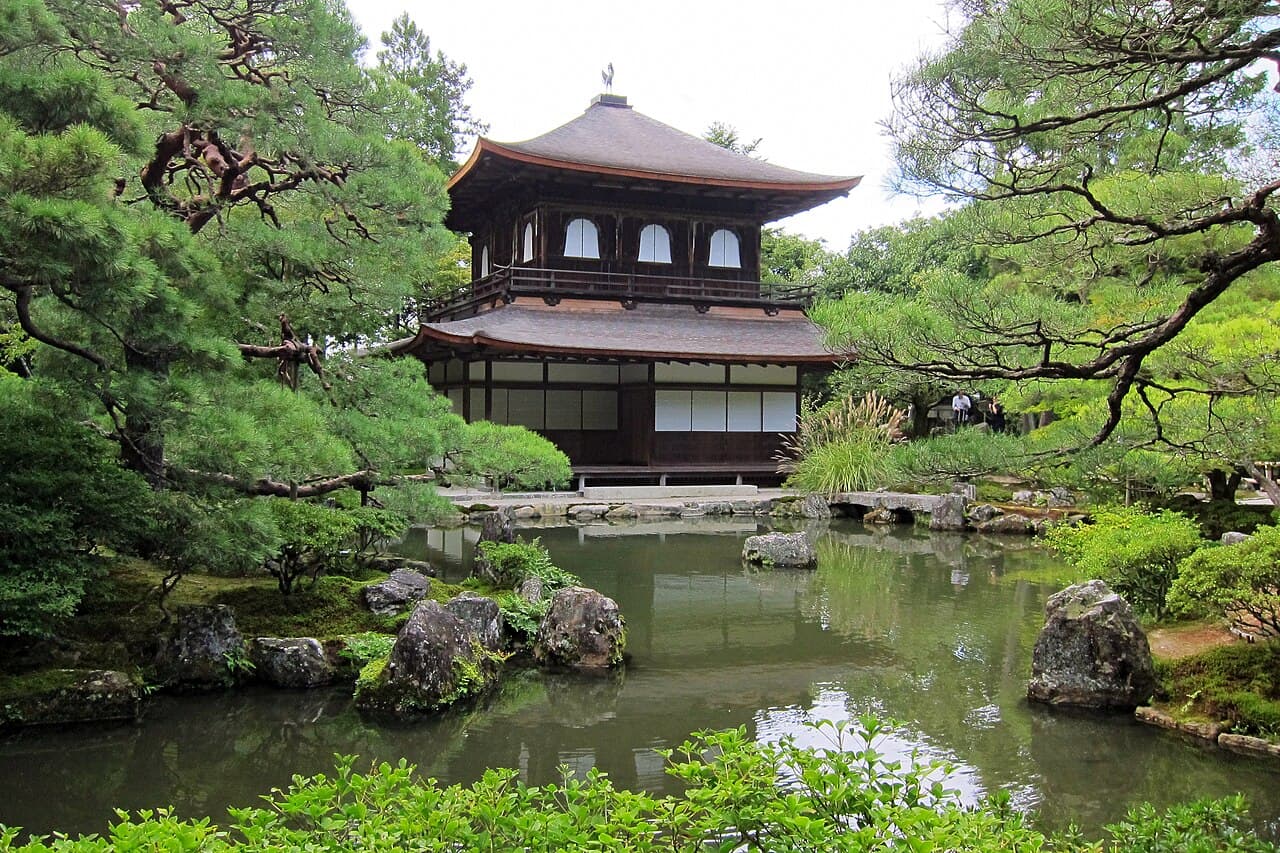
Ginkaku-ji (The Silver Pavilion)
Decades later, Yoshimitsu's grandson, Ashikaga Yoshimasa, sought to emulate his ancestor. He began construction on the "Silver Pavilion" in the eastern hills. However, Yoshimasa’s reign was defined by failure; the disastrous Ōnin War (1467–1477) reduced much of Kyoto to ash during his rule. He retreated from politics into art.
Ginkaku-ji was never covered in silver. Whether due to lack of funds or a shift in aesthetic preference, it remains unfinished timber. Yet, this "failure" birthed the Higashiyama culture. The temple's aesthetic of wabi-sabi, finding beauty in imperfection and simplicity, became the cornerstone of the Japanese tea ceremony, flower arrangement, and ink painting. While his grandfather built a monument to power, Yoshimasa built a monument to the soul of Japanese art.
Loading listing...
The Unifiers
The collapse of the Ashikaga shogunate plunged Japan into the Sengoku period (Warring States period), a century of bloodshed that was brought to an end by three successive "Great Unifiers": Oda Nobunaga, Toyotomi Hideyoshi, and Tokugawa Ieyasu. Their footprints in Kyoto are deep, often marked by fire and tragedy.
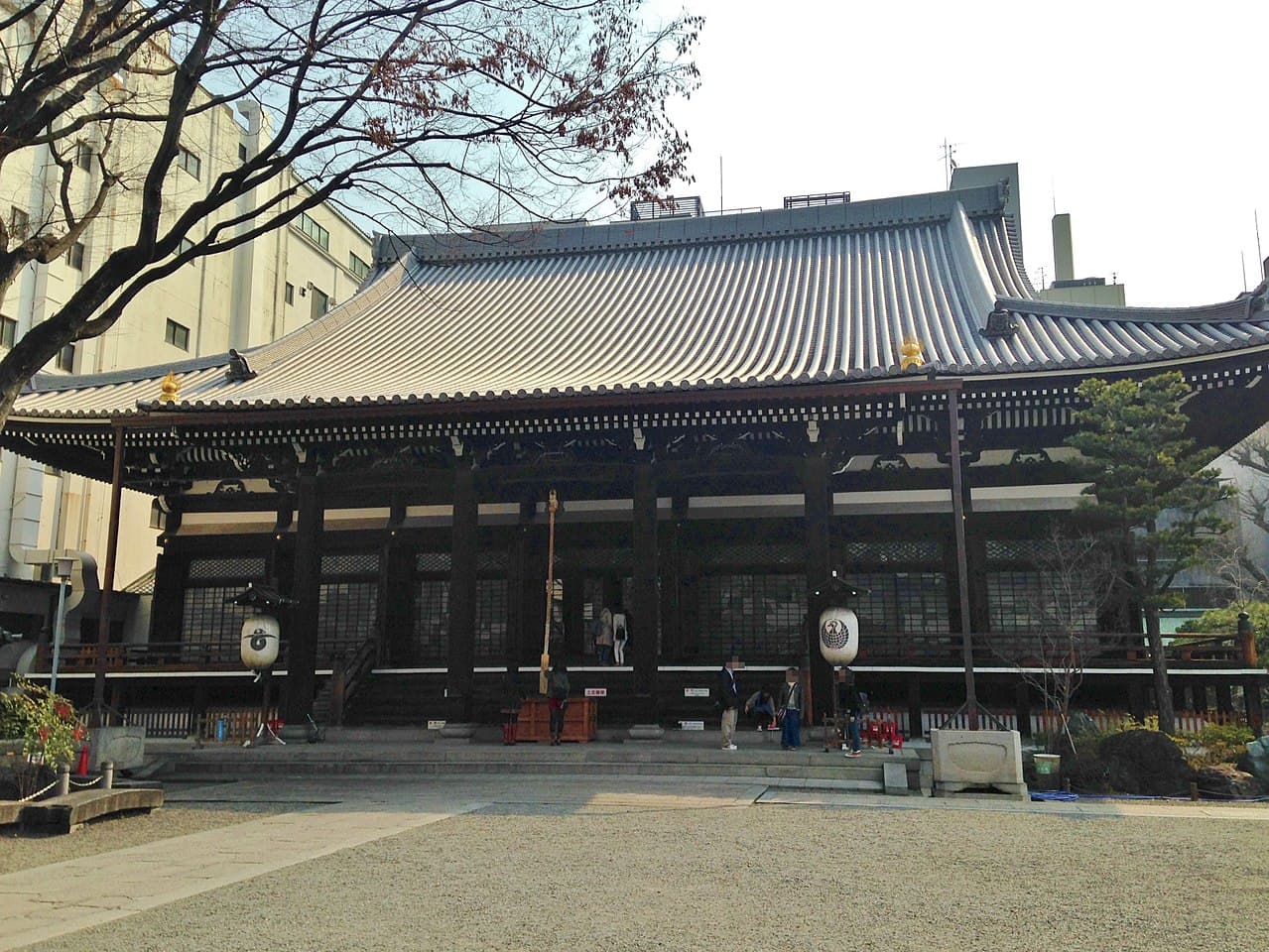
Honnō-ji: The Site of Betrayal
No temple in Kyoto is more synonymous with historical drama than Honnō-ji. In 1582, Oda Nobunaga, the ruthless warlord on the cusp of unifying Japan, was staying at this temple when his own general, Akechi Mitsuhide, launched a surprise attack. Surrounded and outnumbered, the temple ablaze, Nobunaga committed seppuku (ritual suicide).
The "Honnō-ji Incident" changed the course of history instantly. The original temple burned to the ground, taking Nobunaga’s body with it. The current structure, rebuilt by Hideyoshi, sits in a bustling shopping arcade, a quiet sanctuary housing a mausoleum for the warlord. It is a place to contemplate the fragility of power; the man who nearly conquered Japan was undone in a single night of treachery.
Loading listing...
Kōdai-ji and the Toyotomi Legacy
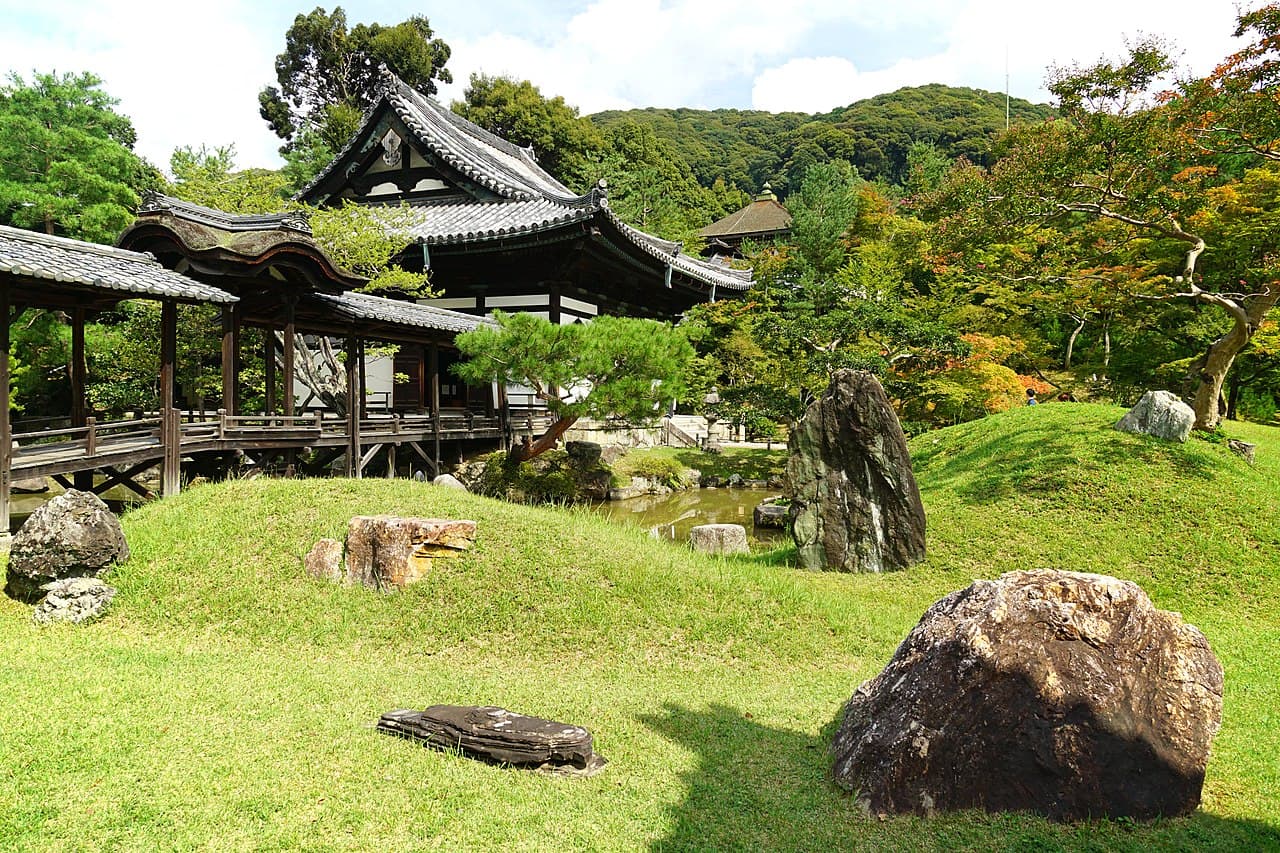
Following Nobunaga's death, his lieutenant Toyotomi Hideyoshi seized control. Hideyoshi’s legacy in Kyoto is complex, marked by grand construction and eventual ruin. Perhaps the most beautiful remnant of his era is Kōdai-ji.
This temple was established in 1606 by Nene, Hideyoshi’s grieving widow, to pray for his soul. Unlike the martial rigidity of other temples, Kōdai-ji exudes a certain elegance and affection, famous for its lacquerware and moon-viewing gardens. It stands as a testament to Nene’s devotion and her political savvy in navigating the dangerous transition of power after her husband's death.
Conversely, Hōkō-ji represents Hideyoshi’s hubris. He attempted to build a Great Buddha to rival the one in Nara. The project was plagued by earthquakes and fires, and eventually, a bell cast for the temple became the pretext for the Tokugawa clan to declare war on the Toyotomi family, leading to their total annihilation. The massive Buddha is gone, but the bell, and the inscription that destroyed a dynasty, remains.
Loading listing...
The Tokugawa Peace
The final victory went to Tokugawa Ieyasu, who established a shogunate that would last for 250 years. The Tokugawa moved the political capital to Edo (modern Tokyo), but they knew they needed to control Kyoto, the home of the Emperor. They did so through imposing architecture and strategic patronage.
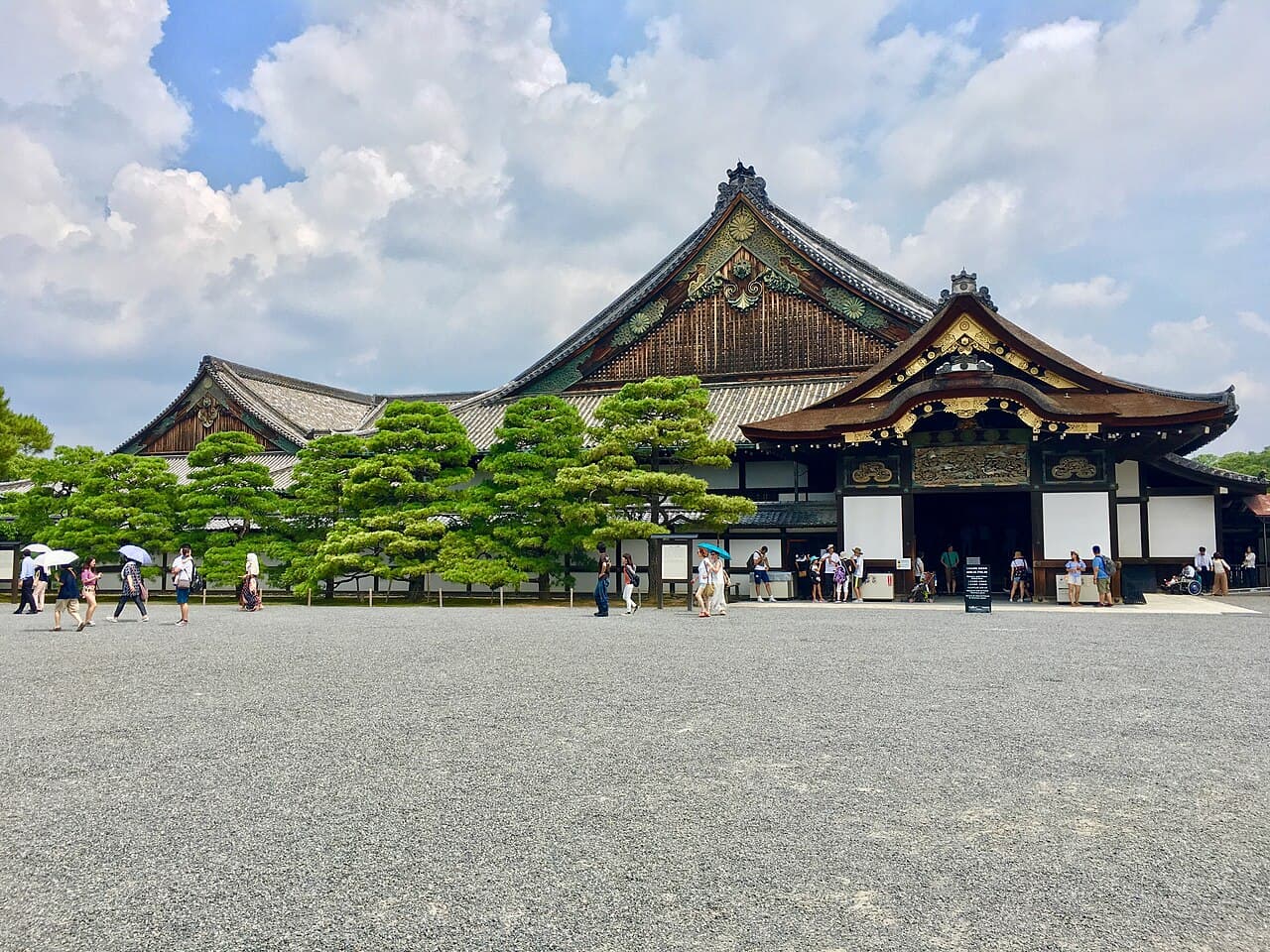
Nijo Castle: The Shogun’s Watchtower
Nijō is the ultimate symbol of the Shogun’s authority over the Emperor. Built in 1603, it is a fortified palace located aggressively close to the Imperial Palace. Its lavish Karamon gate and the Kano school gold-leaf paintings were designed to intimidate imperial envoys.
The castle is famous for its "nightingale floors" (uguisubari), designed to squeak like birds to warn of assassins. It is a place of profound historical symmetry: it was built to mark the beginning of the Tokugawa Shogunate, and 260 years later, it was the site where the last Shogun formally returned power to the Emperor, ending the samurai age.
Loading listing...
Chion-in: The Religious Fortress
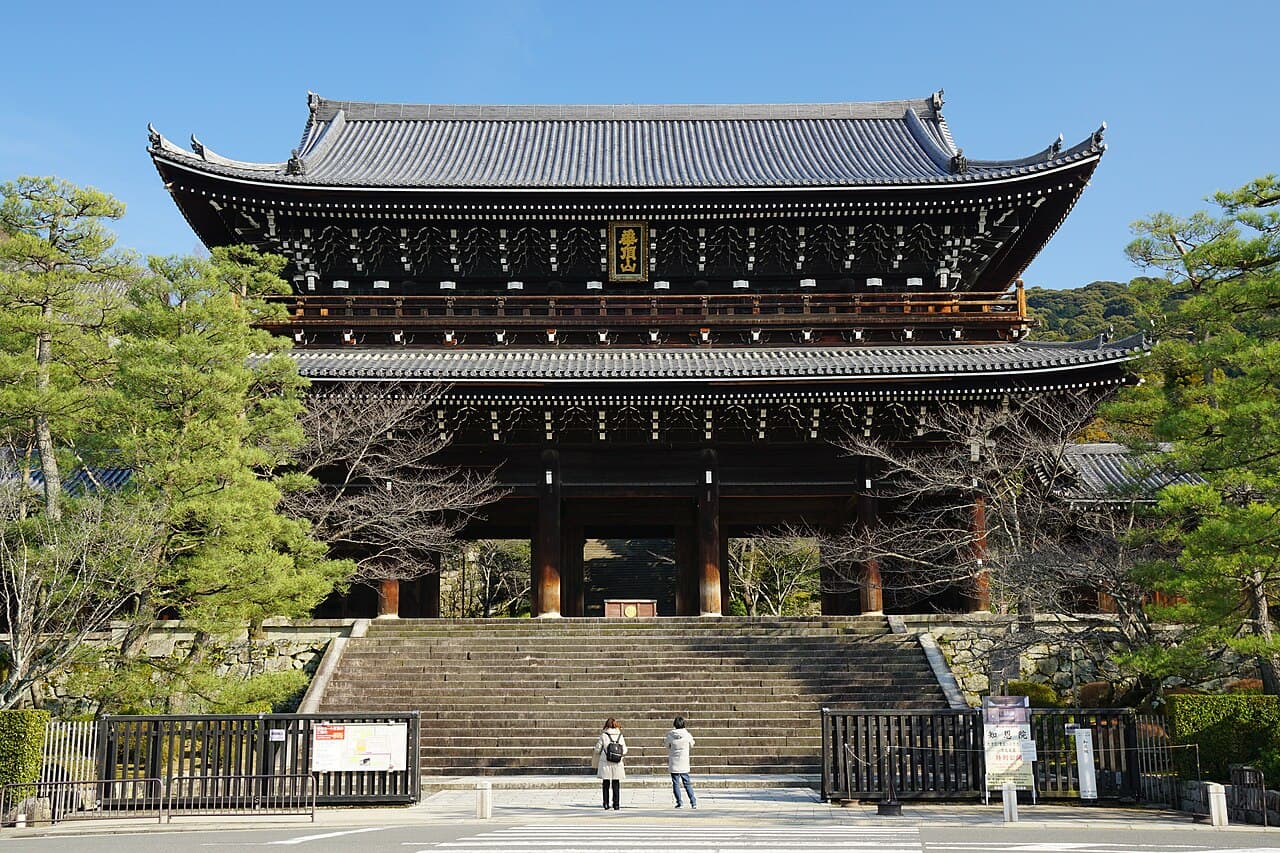
The Tokugawa clan were fervent patrons of the Jodo sect of Buddhism, and they turned its head temple, Chion-in, into a fortress of faith. The temple’s Sanmon gate is the largest wooden gate in Japan, a colossal structure that feels more like a castle entrance than a religious threshold. This was intentional. By funding such massive construction, the Tokugawa cemented their image as protectors of the faith while subtly reminding the city of their immense resources.
Loading listing...
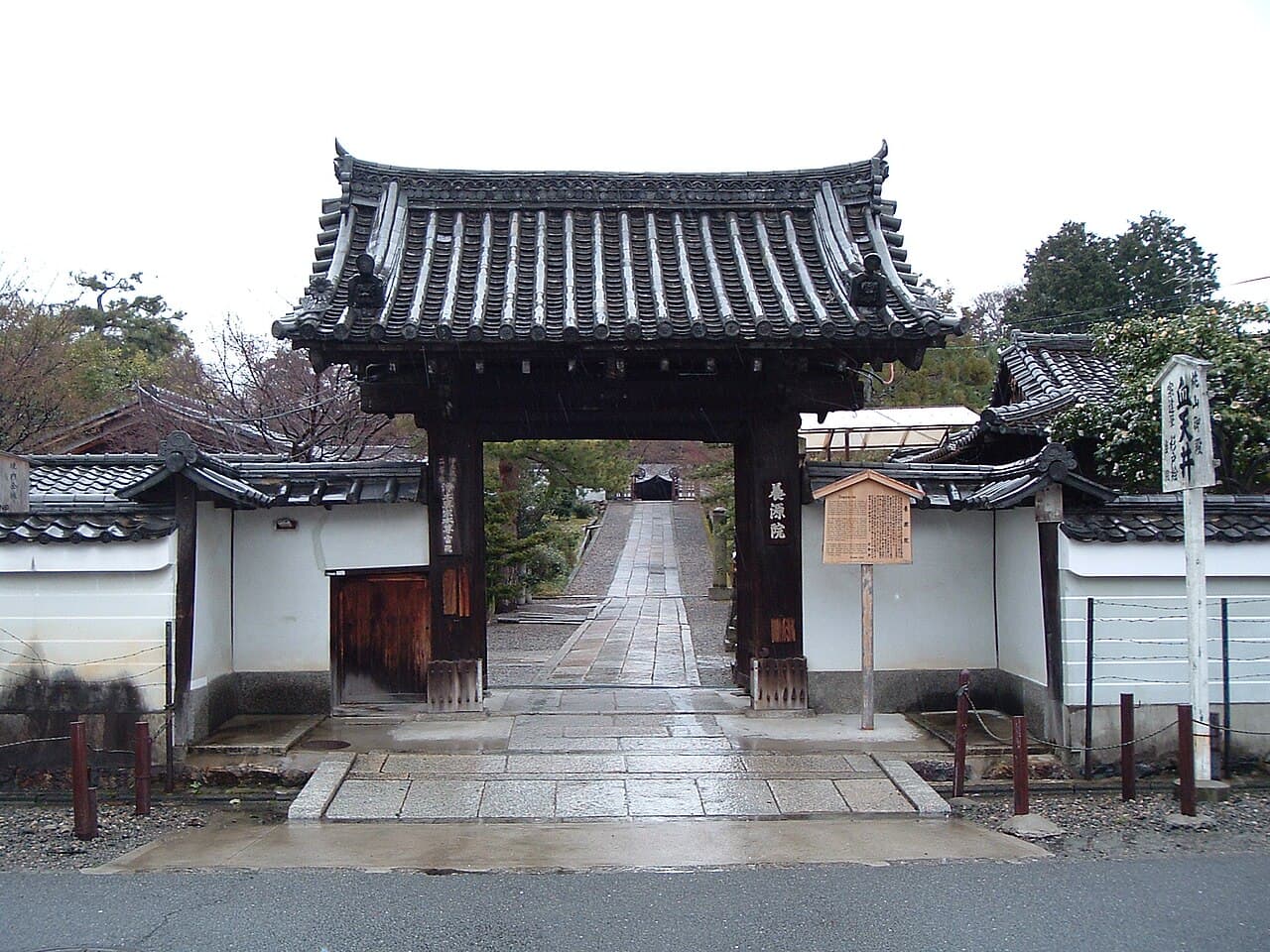
Yōgen-in: The Ceiling of Blood
Perhaps the most visceral reminder of the samurai era lies in the small, quiet temple of Yōgen-in. In 1600, defenders of Fushimi Castle, loyal to Tokugawa Ieyasu, were besieged. Rather than surrender, the garrison committed mass suicide.
To honor their sacrifice, the blood-stained floorboards of the castle were salvaged and installed as the ceilings of several temples in Kyoto, so that the spirits of the warriors could be prayed for daily. At Yōgen-in, if you look up, you can still clearly see the dark, rusted imprints of hands, armor, and faces in the wood. It is a haunting, physical connection to the violence that paved the road to peace.
Loading listing...
The Ancient Roots: Taira and Minamoto
Before the Shoguns, there were the clans. The late Heian period was defined by the rivalry between the Taira and Minamoto families, a conflict that gave birth to the samurai class.
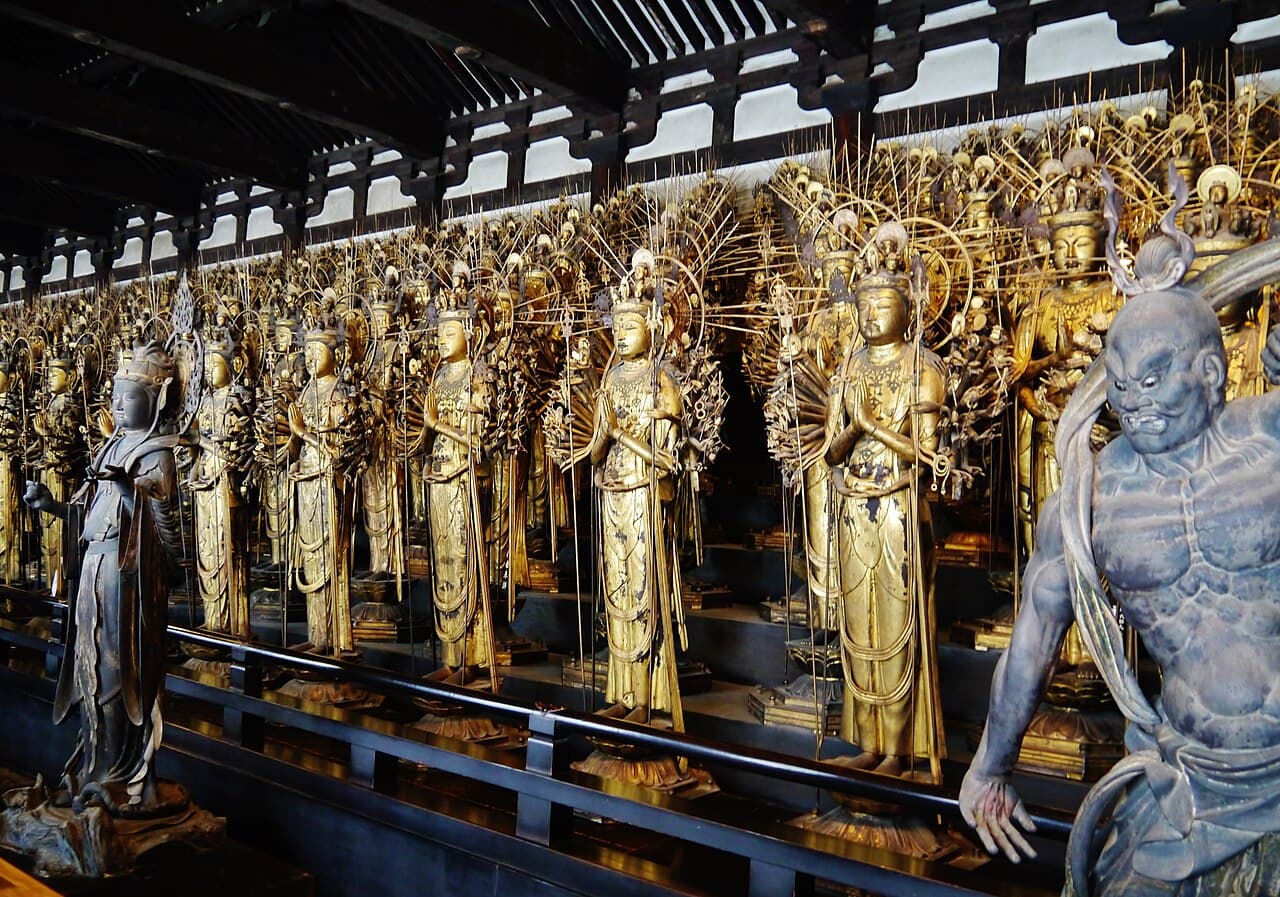
Sanjūsangen-dō stands as a testament to Taira no Kiyomori, the head of the Taira clan. He funded this hall, which houses 1,001 statues of Kannon, creating a psychedelic phalanx of golden deities. It was a display of spiritual merit and immense political wealth.
Meanwhile, deep in the mountains of northern Kyoto lies Kurama-dera. This is where Minamoto no Yoshitsune, one of Japan’s most tragic and legendary heroes, was sent as a child after his father’s defeat. Legend says he was trained in swordsmanship here by Tengu (mountain goblins), honing the skills that would eventually allow the Minamoto clan to crush the Taira and establish the first shogunate.
Loading listing...
Echoes in the Stone
When you walk through Kyoto today, you are walking through the wreckage and the glory of these ambitions. The Zen gardens you admire were often built by men who had just returned from the battlefield. The tea ceremonies you witness were perfected by warlords seeking a moment of peace before the next betrayal.
Aside from being religious sites, Kyoto's temples are the enduring echoes of the men who forged Japan. They remind us that history is rarely clean, but it is often beautiful.