If you spend more than an hour in Kyoto, you’ll likely find yourself standing in front of a wooden slatted box, tossing in a coin, and wondering: Do I clap now? Or is this the silent one?
It’s the classic traveler’s dilemma. Kyoto is a city of over 2,000 religious sites. Some are orange and filled with foxes; others are gold and smell like sandalwood. For the uninitiated, the line between a Shinto Shrine and a Buddhist Temple can feel blurry. And for good reason; for over a millennium, that line didn't really exist.
To understand Kyoto, you have to understand the unique "spiritual roommates" situation of Japan. It’s a story of a 1,400-year marriage, a violent divorce in the 19th century, and a modern-day reconciliation where the average local might visit a shrine to celebrate a wedding and a temple to mourn a death, seeing absolutely no contradiction between the two.
Let’s unravel the holy knot of Kyoto’s spiritual landscape.
The Odd Couple: Theology 101
Shinto and Buddhism are fundamentally different operating systems for the soul, yet they run perfectly on the same hardware (Japanese culture).
Shinto: The Old Landlord
Shinto (The Way of the Gods) is the indigenous faith. It didn’t arrive; it was always here. At its heart is the concept of Kami, spirits that inhabit everything. The mountain has a Kami, the river has a Kami, and that giant old cedar tree definitely has a Kami.
Shinto has no bible, no sermons, and no strict moral commandments. It is deeply concerned with this life. It’s about purity (harae), gratitude, and asking for practical benefits: a good harvest, a safe childbirth, passing an exam, or business prosperity. It is optimistic, sunny, and earthy.
Buddhism: The Sophisticated Import
Buddhism arrived in the 6th century from the mainland (via China and Korea), bringing with it heavy luggage: philosophy, scriptures, and a obsession with the afterlife.
While Shinto celebrates the now, Buddhism addresses suffering and the cycle of death and rebirth. It brought structure, magnificent architecture, and the concept of enlightenment. If Shinto is about living well, Buddhism is about dying well, or rather, transcending the cycle of death entirely.
The Division of Labor
How do they coexist? By splitting the workload. There is a famous Japanese aphorism: "Born Shinto, Die Buddhist."
Life-affirming events like birth celebrations, coming-of-age ceremonies, and weddings are typically Shinto affairs. They are bright, loud, and focus on the vitality of life. Funerals and ancestor worship, however, are almost exclusively Buddhist. The monks take over when the mortal coil is shuffled off, guiding the soul to the next realm.
Spot the Difference: A Field Guide
You don't need a theology degree to tell them apart. You just need to look at the architecture (and check the vibe).
The Shinto Shrine (Jinja)
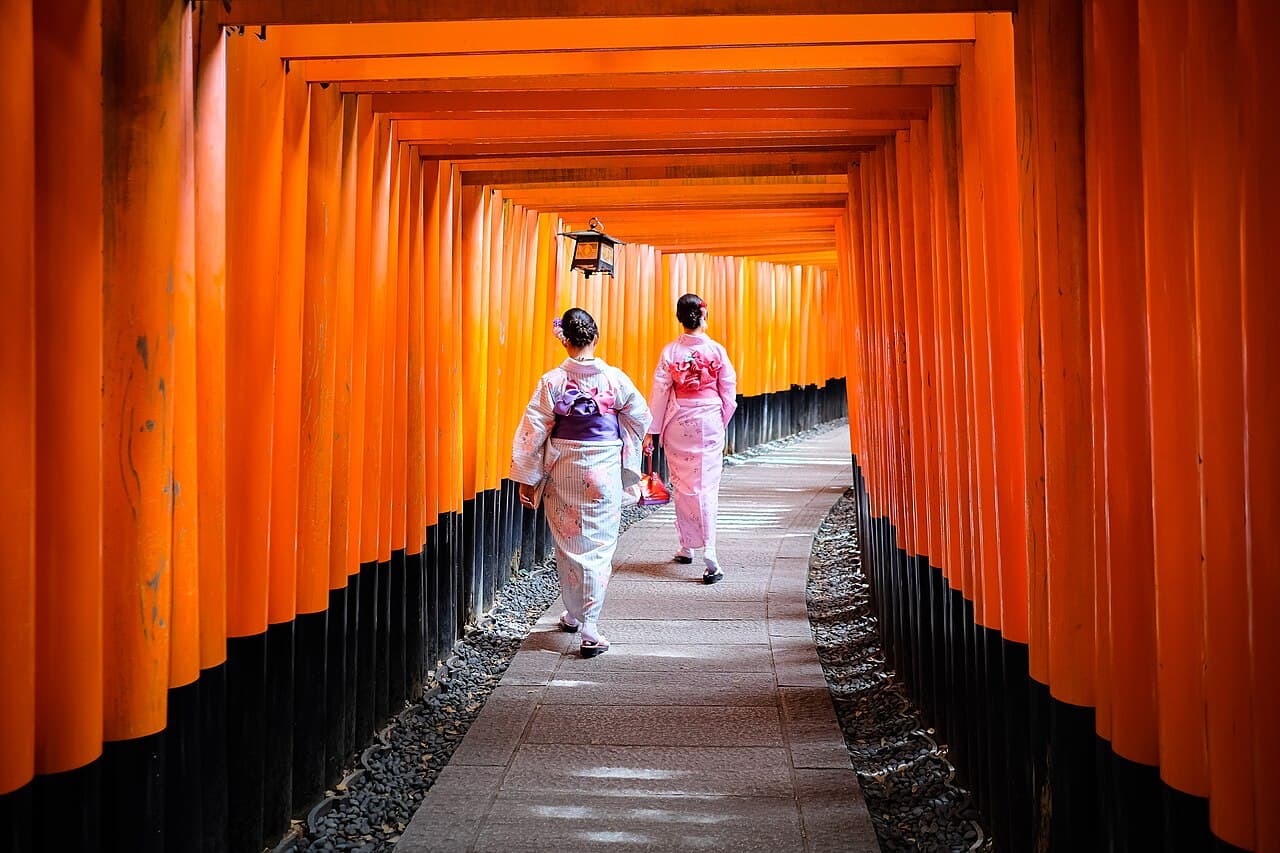
- Look for the Torii. This is the iconic gate (often vermilion, sometimes stone) that looks like the symbol for Pi (π). It marks the border between the profane world and the sacred space of the Kami.
- Often guarded by Komainu (lion-dogs) or, in the case of Inari shrines, Kitsune (foxes).
- Natural vibe. Unpainted wood, thatched roofs, open to the elements. The aesthetic is about blending into the forest.
- Rituals involve purification with water, tossing a coin, and clapping.
Loading listing...
The Buddhist Temple (Otera)
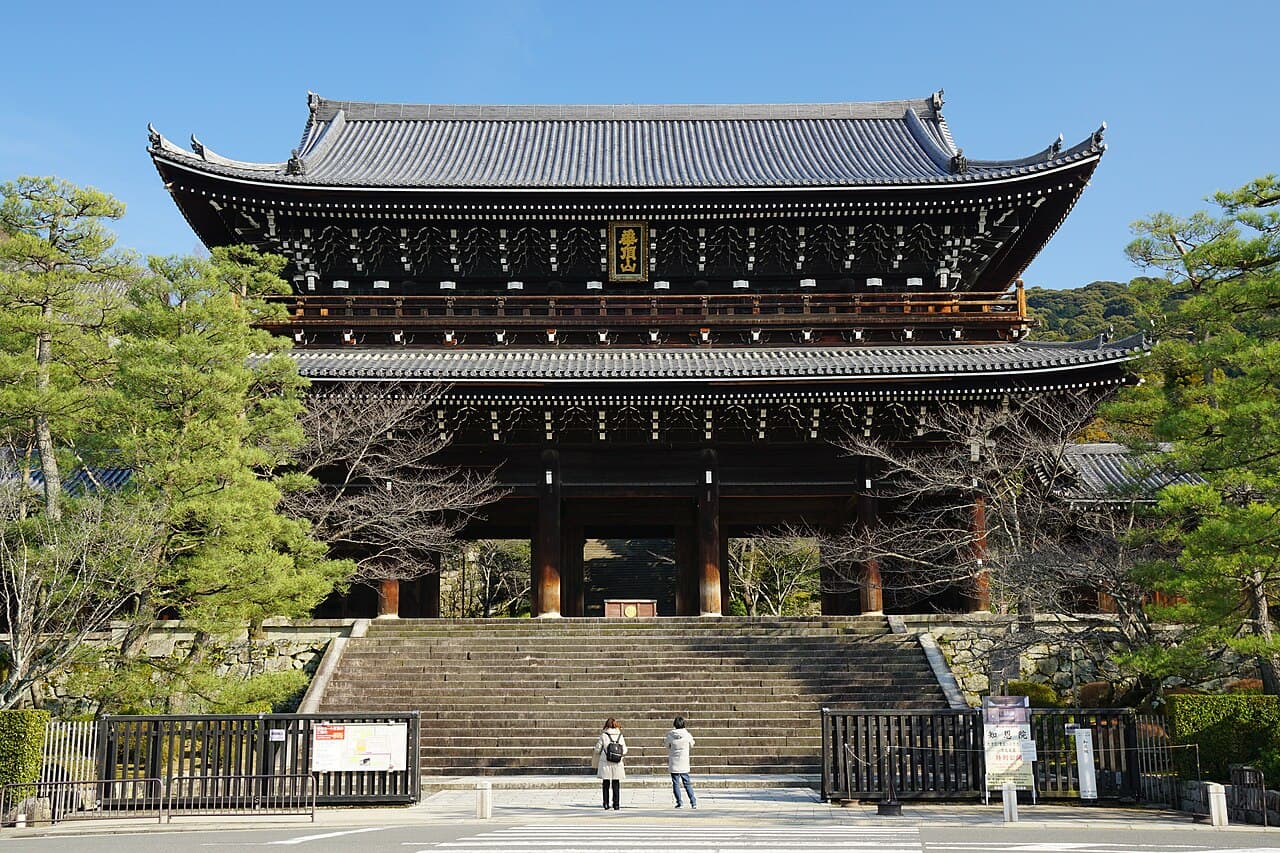
- Look for the Sanmon. These are massive, two-story roofed gates, often housing fierce, muscular guardian statues called Niō who look ready to fight a demon.
- Complex architecture. Curved tiled roofs, gold leaf, intricate carvings, and often a multi-story Pagoda reaching for the sky.
- Heavy, incense-laden, and permanent vibe. It feels like a place of deep contemplation.
- Rituals involve incense burning, silent bowing, and no clapping.
Loading listing...
A History of "Shinbutsu-shūgō" (The Merger)
For most of Japanese history, nobody worried about these distinctions. Following the arrival of Buddhism, the Japanese didn't swap their old gods for new ones; they just invited the new ones in.
This fusion is called Shinbutsu-shūgō. Theologians came up with a clever workaround called honji suijaku, which claimed that Shinto Kami were simply the local Japanese avatars of Buddhist deities. The Sun Goddess Amaterasu? She was just the local manifestation of the Cosmic Buddha Dainichi Nyorai. Problem solved.
For centuries, "Shrine-Temples" (jingu-ji) were the norm. You’d have a Buddhist pagoda sitting right next to a Shinto shrine, overseen by the same clergy. It was a spiritual buffet, and everyone was happy.
The Violent Divorce of 1868
If you walk around Kyoto today, you see shrines and temples as distinct, separate entities. This isn't natural evolution; it was a government mandate.
In 1868, the Meiji Restoration modernized Japan. The new government wanted to rally the nation around the Emperor (who was seen as a living Shinto Kami). To do this, they needed to elevate Shinto and strip away the "foreign" influence of Buddhism.
They issued the Shinbutsu Bunri (Kami-Buddha Separation) decree. What followed was a tragedy known as Haibutsu Kishaku ("Abolish Buddhism, Destroy Shakyamuni").
It was brutal. In a frenzy of misplaced nationalism, mobs and officials destroyed roughly 40,000 temples across Japan. Ancient statues were beheaded or burned for firewood. Temple bells were melted down to make cannons. The syncretic "Shrine-Temples" were torn apart. The Buddhist structures within shrine grounds were demolished, and priests were forced to choose a side.
Kyoto, being the cultural capital, preserved more than most, but the scars remain. The rigid separation you see today is the result of this artificial, violent bureaucratic split.
Kyoto: The Living Laboratory
Despite the divorce, the couple still hangs out. Kyoto is the best place on earth to see how these traditions still bleed into one another.
The Syncretic Survivor
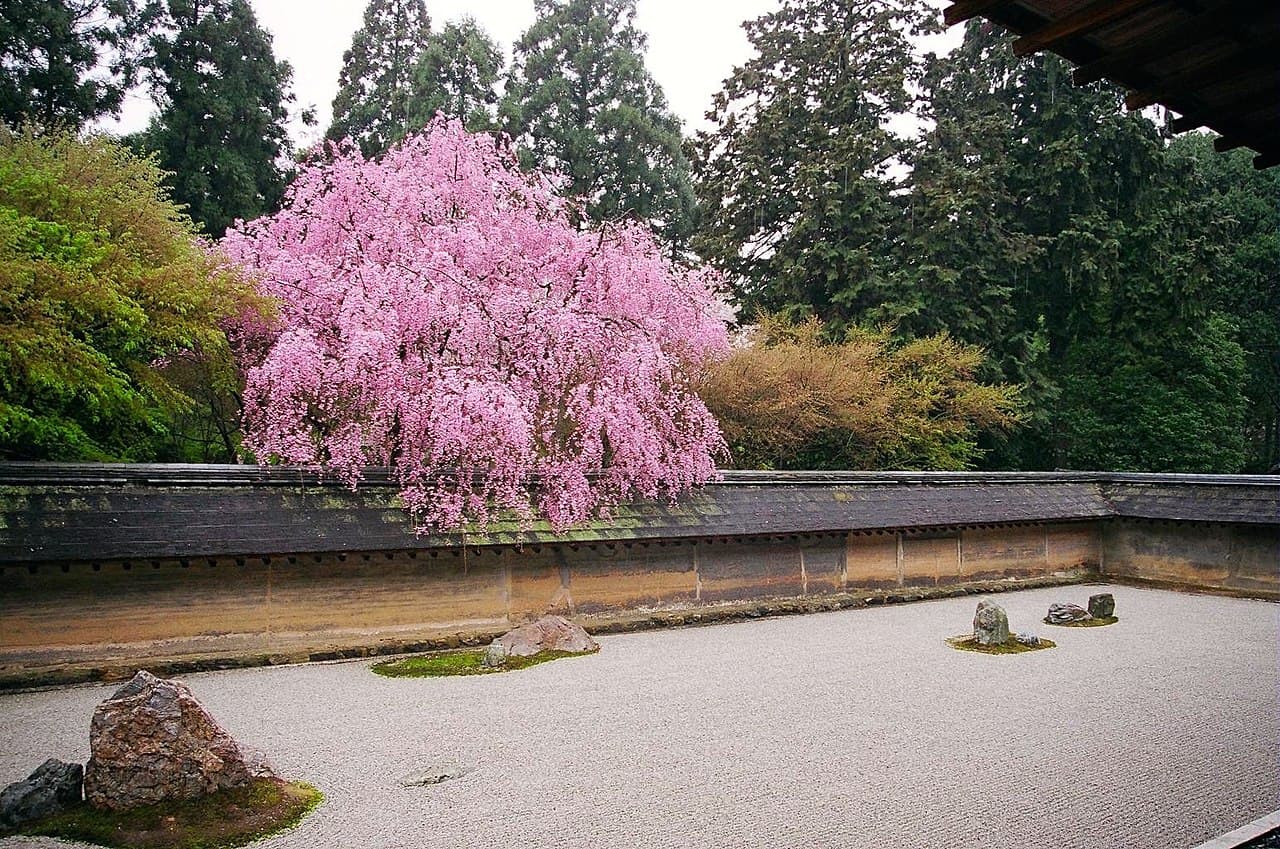
Visit Ryōan-ji, famous for its Zen rock garden. It is undeniably a Buddhist temple. Yet, walk the grounds, and you will find a Torii gate and a shrine dedicated to Benzaiten on an island in the pond. Even after the Meiji purge, the monks couldn't bear to evict the Kami. The layout tells the story of the old marriage.
Loading listing...
The Old Guard
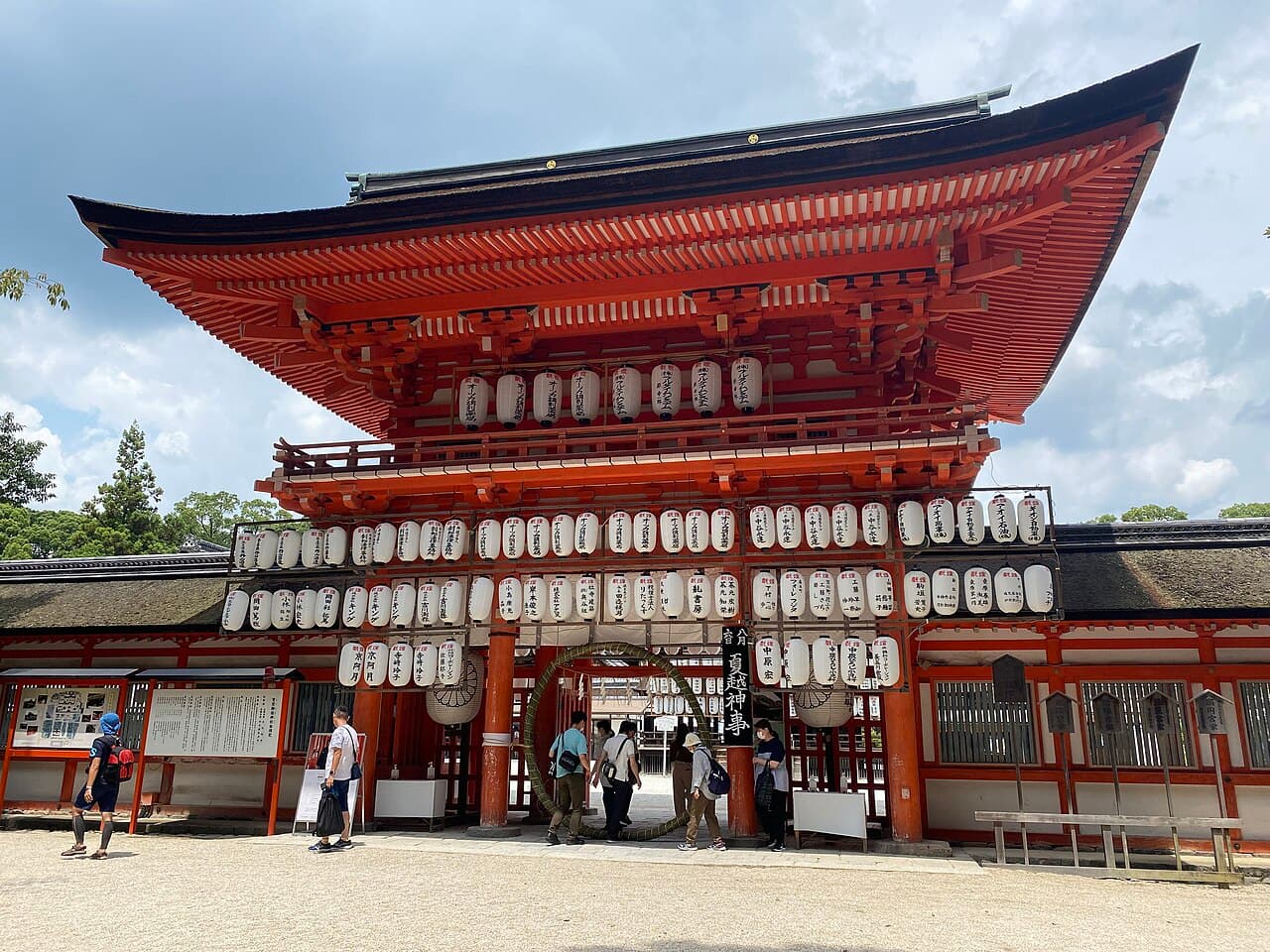
Shimogamo Shrine represents the deep, pre-Buddhist roots of Kyoto. Located in the ancient Tadasu no Mori (Forest of Correction), it feels primal. It predates the city itself. Here, the architecture is simple, the wood is unpainted, and the focus is on the sacred power of the forest. It is Shinto in its purest form.
Loading listing...
The Buddhist Giant
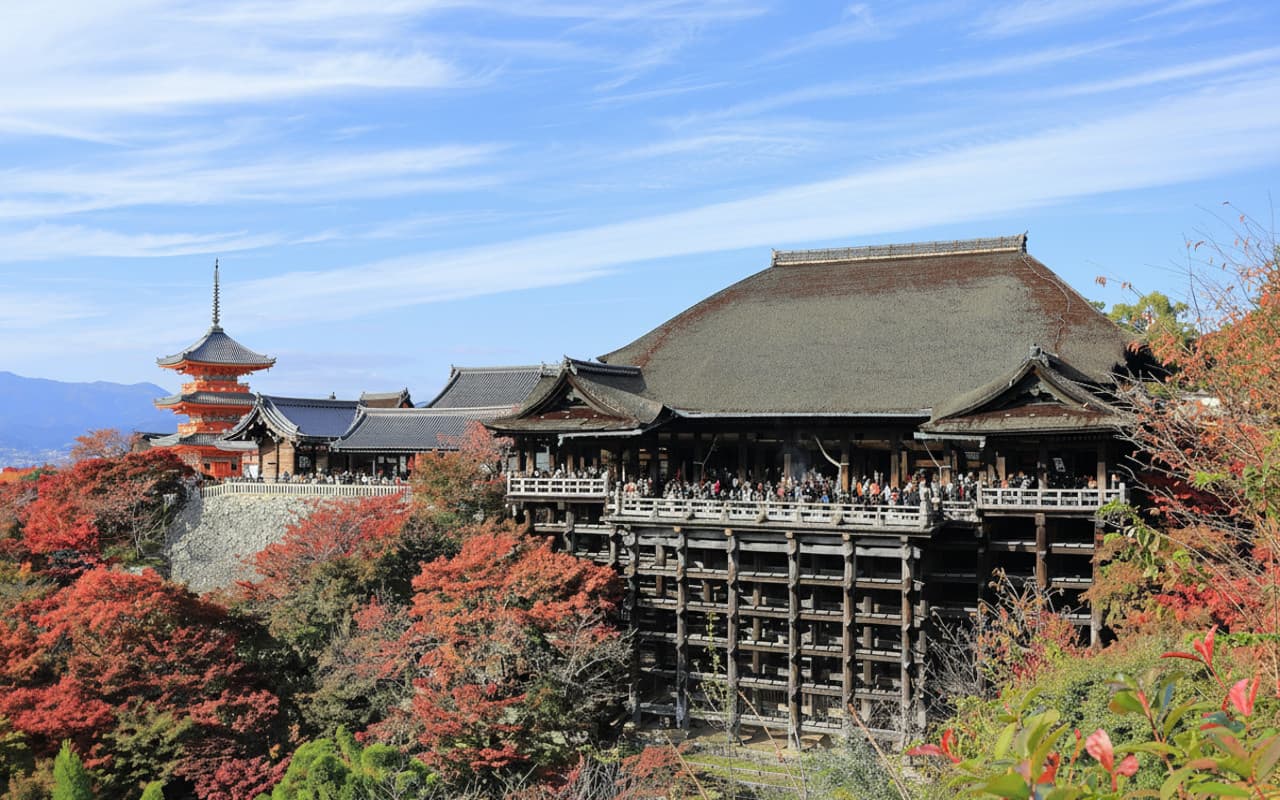
Kiyomizu-dera is the counterweight. It is a massive Buddhist complex perched on a hill. It deals in grand concepts, heavy timber construction, and the worship of Kannon. Yet, directly behind the main hall stands Jishu Shrine, a Shinto shrine dedicated to love. For centuries, you prayed to Kannon for salvation and the Love Kami for a spouse, all in one trip.
Loading listing...
How Not to Embarrass Yourself: A Cheat Sheet
When you approach the altar, the architecture tells you what to do.
If you are at a Shinto Shrine (Torii gate):
- Purify: Wash your hands and mouth at the water basin (temizuya). Don't drink from the ladle!
- Offer: Throw a coin into the box.
- Ring: Shake the rope to ring the bell (wakes up the Kami).
- The Combo: Bow twice. Clap twice. Pray silently. Bow once.
If you are at a Buddhist Temple (Sanmon gate, incense):
- Purify: Lighting incense is common here. Fan the smoke over your head or ailing body parts.
- Offer: Throw a coin into the box.
- The Combo: Bow slightly. Put your hands together in prayer. Do NOT clap. (Clapping is for Kami; Buddhas prefer quiet). Bow again.
Conclusion: The Harmony of Duality
In the West, we often demand religious exclusivity. You are this, or you are that. Kyoto rejects this binary.
Here, spirituality is functional, not dogmatic. You go to the shrine to thank the local spirits for the sunrise. You go to the temple to ponder the impermanence of that sunrise. The beauty of Kyoto’s spiritual landscape isn't in one conquering the other, but in how they have managed to carve out space for every aspect of the human experience: the joy of living and the mystery of dying.
So, when you visit, don't worry too much about picking a team. Throw a coin to the Kami, light a stick of incense for the Buddha, and enjoy the harmony of doing both.