Ever heard of the Zen master who answers a profound question with a sudden, deafening shout? Or the one who responds to a student's confusion with a sharp rap from a stick? If these fierce, enigmatic images come to mind when you think of Zen, you're thinking of Rinzai.
This isn't the gentle, placid Buddhism you might imagine. Rinzai Zen is a path of dynamite. It’s a tradition born from the explosive teaching style of Chinese master Linji Yixuan (Rinzai Gigen in Japanese), who believed that intellectual understanding was a trap. The only way to true awakening, he taught, was to shatter the cage of logical thought and experience reality directly. His methods were designed to do just that, that is, to jolt students out of their heads and into the raw, unfiltered present moment.
In Kyoto, the ancient heart of Japanese Zen, this intense tradition found its most fertile ground. Here, Rinzai is far more than a dusty philosophy. It lives in the severe beauty of a rock garden, the disciplined lines of a temple roof, and the profound silence of a meditation hall.
To truly understand Rinzai, you have to walk its grounds. Let’s journey through three of Kyoto's most important Rinzai head temples. Each one is a world unto itself, offering a different flavor of this dynamic, demanding, and deeply rewarding path.
Beyond the Shouts and Riddles
Before we step through the temple gates, let's get our bearings. What exactly is this path of "sudden awakening"? At its core, Rinzai Zen practice revolves around two key pillars:
-
Zazen (坐禅): This is seated meditation, the bedrock of all Zen practice. It’s the discipline of sitting still, focusing on the breath, and observing the mind without getting swept away by its endless chatter. Zazen is the forge where the practitioner develops the stability and concentration needed for the real work.
-
Kōan (公案): These are the famous, paradoxical riddles that Rinzai is known for. The classic is, "You know the sound of two hands clapping. What is the sound of one hand?" A kōan is not a puzzle to be solved with logic. It’s a tool designed to short-circuit the rational mind. By wrestling with a question that has no logical answer, the student exhausts their intellect until it finally gives up, creating an opening for a flash of intuitive insight, or kenshō (見性; "seeing into one's true nature").
While the Sōtō school of Zen (the other major sect in Japan) emphasizes shikantaza, or "just sitting," with the faith that enlightenment is already present, Rinzai actively prods and provokes the mind to wake up. It’s a practice of great effort and great doubt, leading to a moment of great awakening.
Tōfuku-ji: The Grand Cathedral of Zen
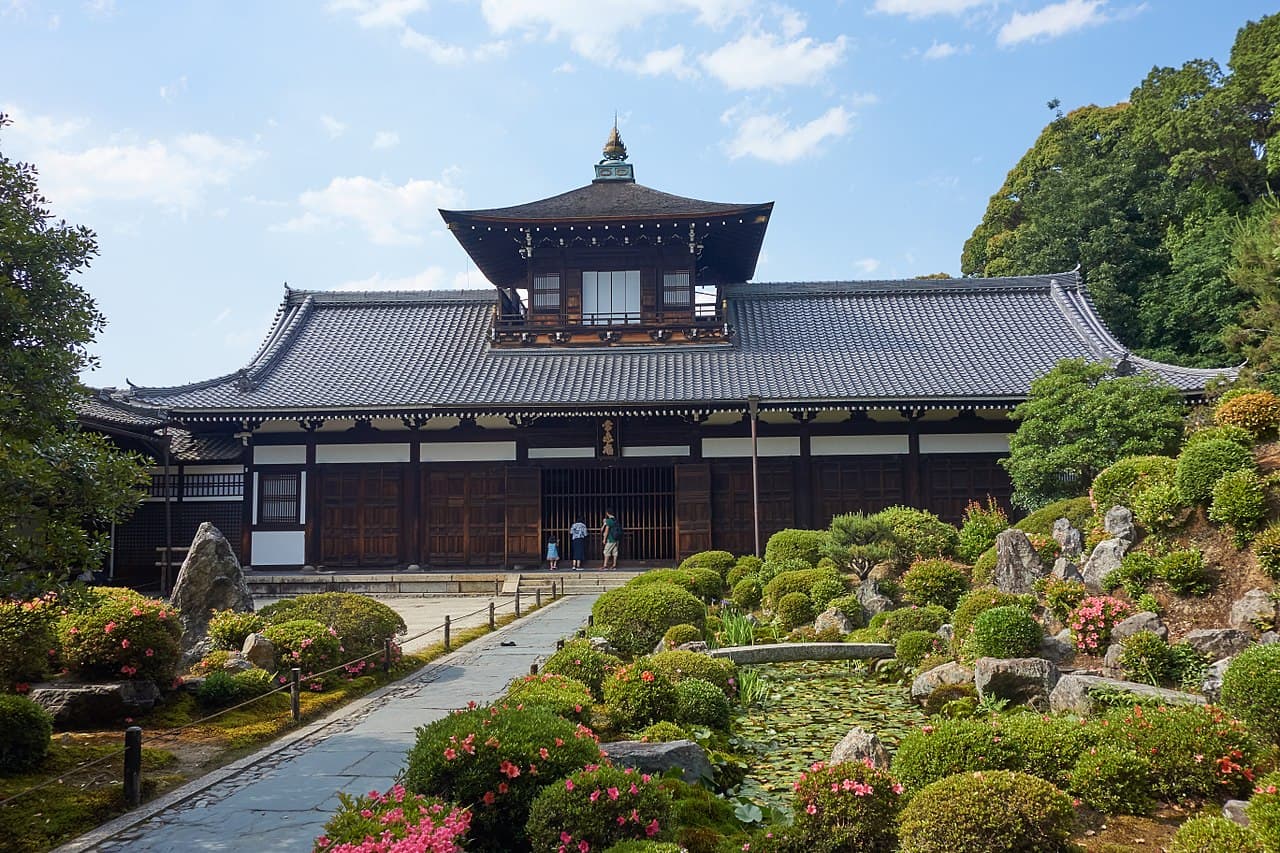
Stepping into the grounds of Tōfuku-ji feels like entering a vast, sacred park. Founded in 1236, it's one of the great "Five Mountain" temples of Kyoto, a monumental complex that radiates a sense of history and establishment power. It's famous across Japan for one thing above all: the breathtaking sea of maple trees that fills its central valley.
In autumn, a pilgrimage of thousands descends upon the Tsūtenkyō Bridge, a long, covered walkway that spans the ravine. Looking down, you are suspended above a staggering ocean of crimson and gold. It's an experience of overwhelming beauty, a sensory shock that can, in its own way, stop the mind just as effectively as a master's shout.
Loading listing...
The Vibe
Tōfuku-ji feels grand, ancient, and deeply connected to nature. Its scale is immense, and you could spend hours exploring its 25 sub-temples. The main buildings, like the colossal Sanmon gate that is the oldest of its kind in Japan, are architectural titans that speak to the temple's long and prosperous history.
What to See
- Tsūtenkyō Bridge: An absolute must in autumn, but beautiful and serene at any time of year. It’s a perfect spot to contemplate the Zen appreciation for transient beauty.
- The Hōjō Gardens: Designed in the 1930s by modernist master Shigemori Mirei, these four gardens surrounding the abbot's hall are a revelation. The most famous is the North Garden's checkerboard of moss and stone, a stunning fusion of ancient principles and modern abstraction.
- Sanmon Gate: Don't just walk through it; stand back and appreciate the sheer scale and power of this 15th-century structure. It’s a gate that makes you feel small, a fitting entry into a place of profound spiritual pursuit.
The Rinzai Connection
Tōfuku-ji represents the institutional grandeur of Rinzai Zen. Its history is tied to the shogunate and the official organization of Zen in Japan. Yet, it remains a living center of practice, offering public zazen sessions where visitors can experience the temple's core discipline firsthand. Its famous natural beauty serves as a powerful, non-verbal teaching on the Zen concept of impermanence.
Myōshin-ji: The Sprawling Zen City
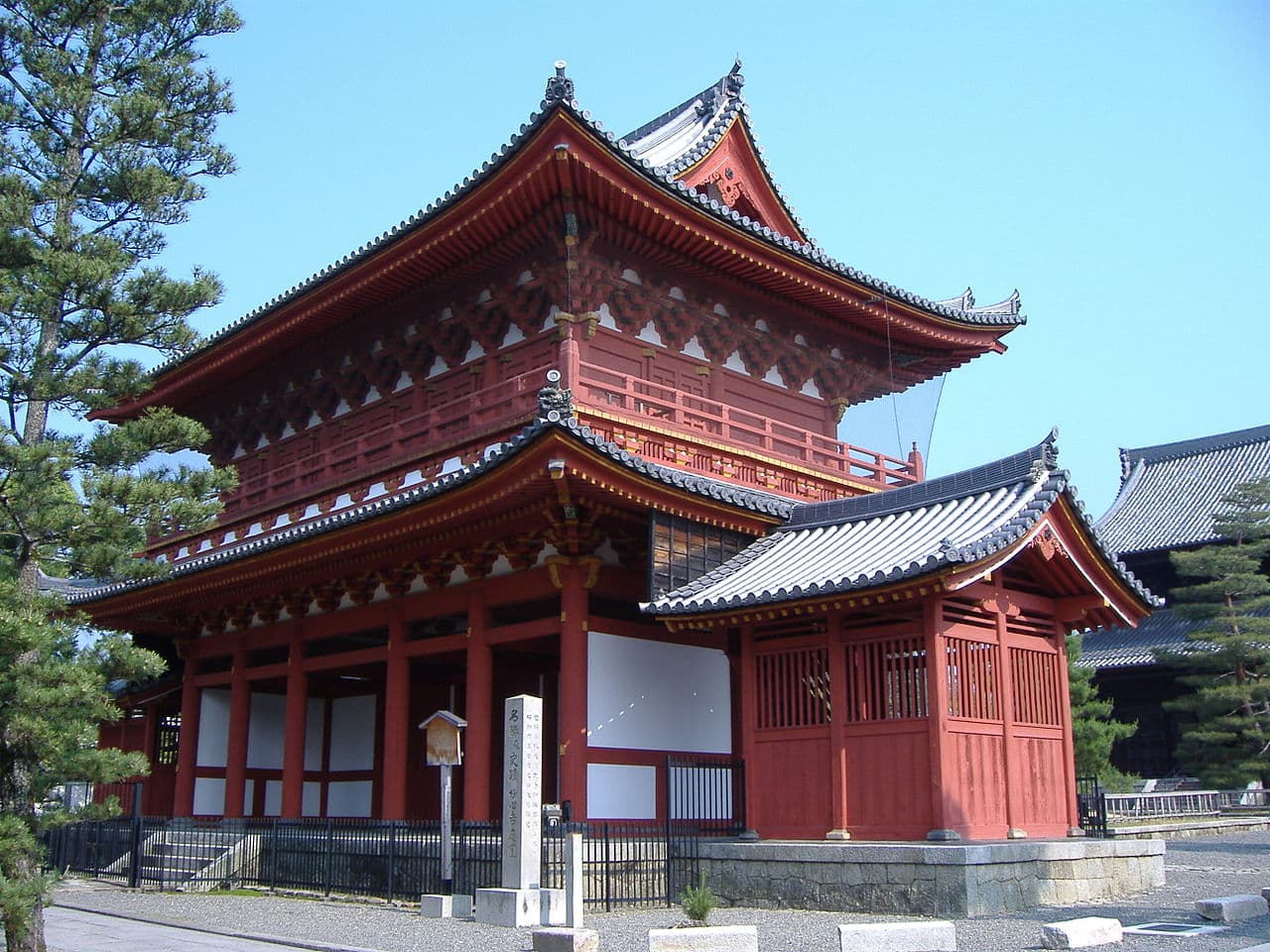
If Tōfuku-ji is a cathedral, Myōshin-ji is an entire city. Located in northwestern Kyoto, this vast, walled complex is the head temple for over 3,000 affiliated temples across Japan. To enter its grounds is to leave the modern city behind and wander into a labyrinth of stone paths, ancient temple halls, and secluded gardens.
Getting lost in Myōshin-ji is part of the experience. You’ll stumble upon quiet sub-temples where the only sound is a monk sweeping leaves, and others with stunning gardens that are open to the public. The complex is so large it has its own atmosphere, one of deep tranquility and serious, ongoing practice.
Loading listing...
The Vibe
Serene, sprawling, and authentic. Myōshin-ji feels less like a tourist destination and more like a living, breathing monastic community. It's renowned in Kyoto for its dedication to zazen, and that quiet, focused energy permeates the entire complex.
What to See
- The Hattō (Dharma Hall): Look up. The ceiling is dominated by a magnificent, swirling dragon painted by the artist Kanō Tan'yū. It took him eight years to complete, and it’s a powerful symbol of the Dharma protecting the teachings.
- Taizō-in Sub-temple: One of the most accessible and beautiful sub-temples, it features a famous ink-wash painting and a stunning stroll garden. They often offer zazen and tea ceremony experiences for visitors.
- The Temple Bell: Cast in 698, this is one of the oldest bells in Japan. Its deep, resonant sound is a beautiful auditory anchor to the temple’s long history.
The Rinzai Connection
Myōshin-ji is the heart of Rinzai practice. It is here that the tradition is actively transmitted on a massive scale. Its commitment to making zazen accessible to the public is a core part of its mission. For any traveler wanting to do more than just see a temple, to actually experience its core practice, Myōshin-ji is the place to go.
Daitoku-ji: The Walled Village of Tea and Austerity
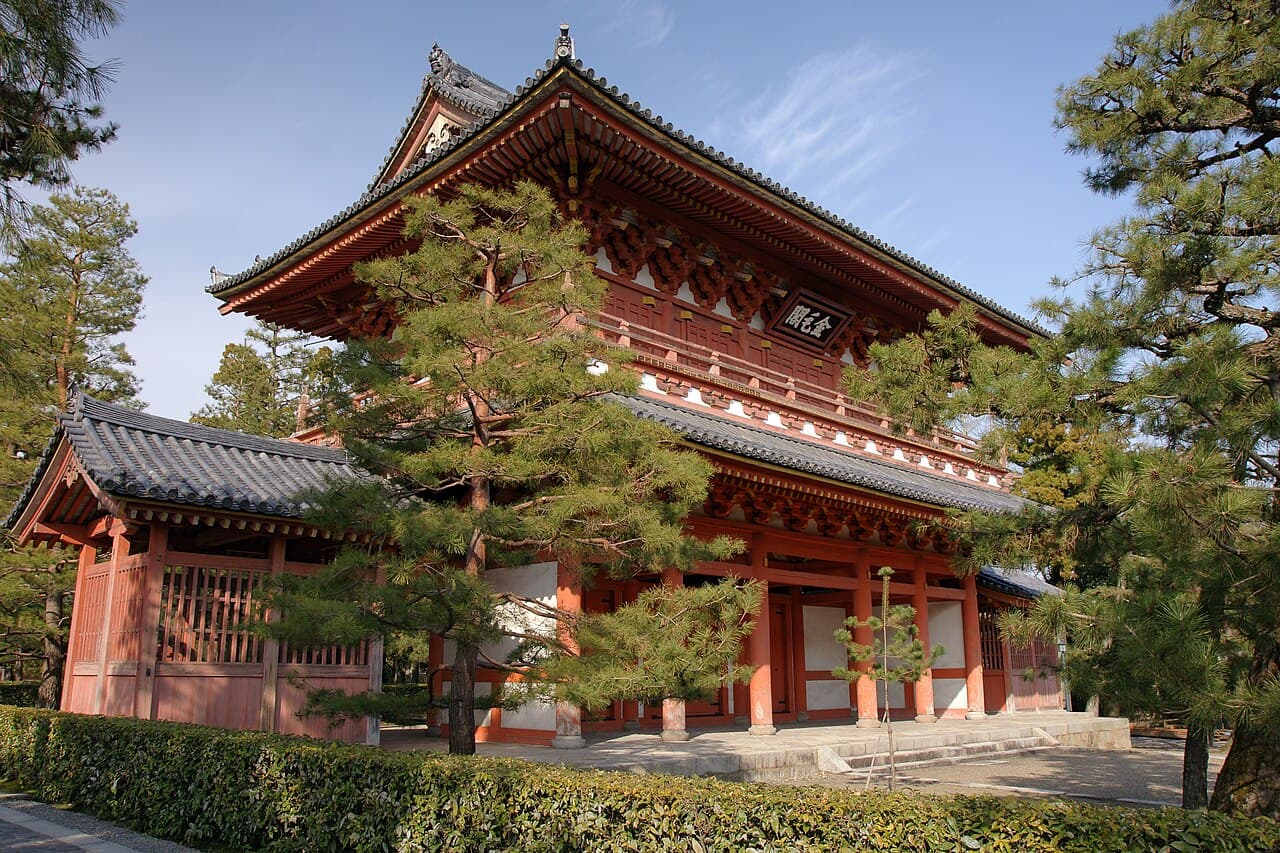
North of the city center lies Daitoku-ji, a walled world that feels more like an intimate village than a sprawling complex. While also large, its character is completely different from the other two. Daitoku-ji is the temple most deeply connected with the austere beauty of the Japanese tea ceremony.
This is where the legendary tea master Sen no Rikyū studied Zen and perfected the wabi-cha style, which finds profound beauty in simplicity, imperfection, and rustic materials. The sub-temples here are treasure troves of Zen aesthetics, featuring some of Japan's most famous rock gardens and historic tea houses.
Loading listing...
The Vibe
Austere, refined, and deeply contemplative. Daitoku-ji has an air of quiet dignity. It’s a place that values subtraction over addition, where meaning is found in the empty space and beauty in the weathered stone.
What to See
- Daisen-in Sub-temple: Home to one of the most celebrated karesansui (dry landscape) gardens in Japan. The garden wraps around the building, telling a metaphorical story of the journey of life, from a crashing waterfall of rock to a calm, open sea of gravel. It's a three-dimensional ink painting.
- Ryōgen-in Sub-temple: Features five different dry rock gardens, including the oldest in Daitoku-ji. It's a masterclass in the art of Zen gardening.
- Kōtō-in Sub-temple: Famous for its simple, elegant atmosphere and a beautiful moss garden approached through a stunning bamboo-lined path. It's the essence of wabi-sabi.
The Rinzai Connection
Daitoku-ji embodies the profound influence of Rinzai Zen on Japanese culture. It shows how the principles of mindfulness, directness, and appreciation for the present moment, cultivated through zazen, flowered into the sophisticated arts of the tea ceremony and garden design. To visit Daitoku-ji is to see Zen philosophy made tangible.
A Final Thought
Rinzai Zen isn't easy. It asks you to confront the limits of your own mind. It challenges you to let go of what you think you know and to be open to a different kind of seeing. Visiting these temples won't give you all the answers. In fact, they might leave you with more questions.
But as you walk the quiet paths of Myōshin-ji, stand before the stark beauty of a Daitoku-ji rock garden, or gaze out over the fiery maples of Tōfuku-ji, you might find that the questions themselves begin to change. The path of Rinzai doesn’t offer easy comfort. Instead, it offers something far more valuable: a resonant silence, and a chance to hear something new within it.