In the West, autumn is often seen as a dying. The leaves turn brown, the air grows cold, and we brace ourselves for the end of the year. In Kyoto, autumn is a burning. It is the moment when the world flames into its most brilliant, vivid self right before it disappears.
This phenomenon is called momiji-gari (紅葉狩), literally "red leaf hunting." Every November, millions of people descend upon Kyoto to hunt for these colors. On the surface, it looks like mass tourism; crowds shuffling through temple gates, cameras clicking furiously at maple trees. But peel back the layer of modern noise, and you find a spiritual practice that dates back over a thousand years.
For the Japanese, watching the leaves turn goes way beyond sightseeing. It is a confrontation with the divine and a meditation on the defining truth of existence: everything you love will vanish, and that is precisely why it is beautiful.
The Theology of Red Leaves
To understand momiji-gari, you have to look through the twin lenses of Japan’s spiritual heritage: Shinto and Buddhism.
Shinto: The Burning Bush
In Shinto, nature is not dead matter; it is alive with Kami (spirits). Mountains, waterfalls, and great trees are sacred. When the mountains of Kyoto turn red and gold, it is seen as a manifestation of the divine force (kan'no).
The ancient forests that surround Kyoto’s shrines are called chinju no mori (sacred shrine forests). In autumn, by changing color, these forests become a visual expression of the Kami’s power. To walk through a tunnel of burning maples is to walk through the breath of the gods.
Buddhism: Beautiful Because It Dies
If Shinto sees the divine in the leaves, Buddhism sees the truth of Mujō (impermanence).
Zen Buddhism teaches that suffering comes from clinging to things that cannot last. The cherry blossom in spring and the red maple in autumn are the ultimate teachers of this lesson. They are breathtakingly beautiful for a few weeks, and then they are gone.
In the Zen aesthetic of wabi-sabi, beauty is found in the imperfect, the incomplete, and the fleeting. A plastic leaf that stays red forever is ugly because it is a lie. A real leaf that withers and falls is beautiful because it is true. When you participate in momiji-gari, you are practicing a form of open-eyed meditation, acknowledging that you too are like the leaf: brilliant, temporary, and dying.
The Sacred Stages: Where to "Hunt"
Kyoto’s temples were designed with this experience in mind. Their gardens are philosophical instruments.
Eikan-dō: The King of Autumn
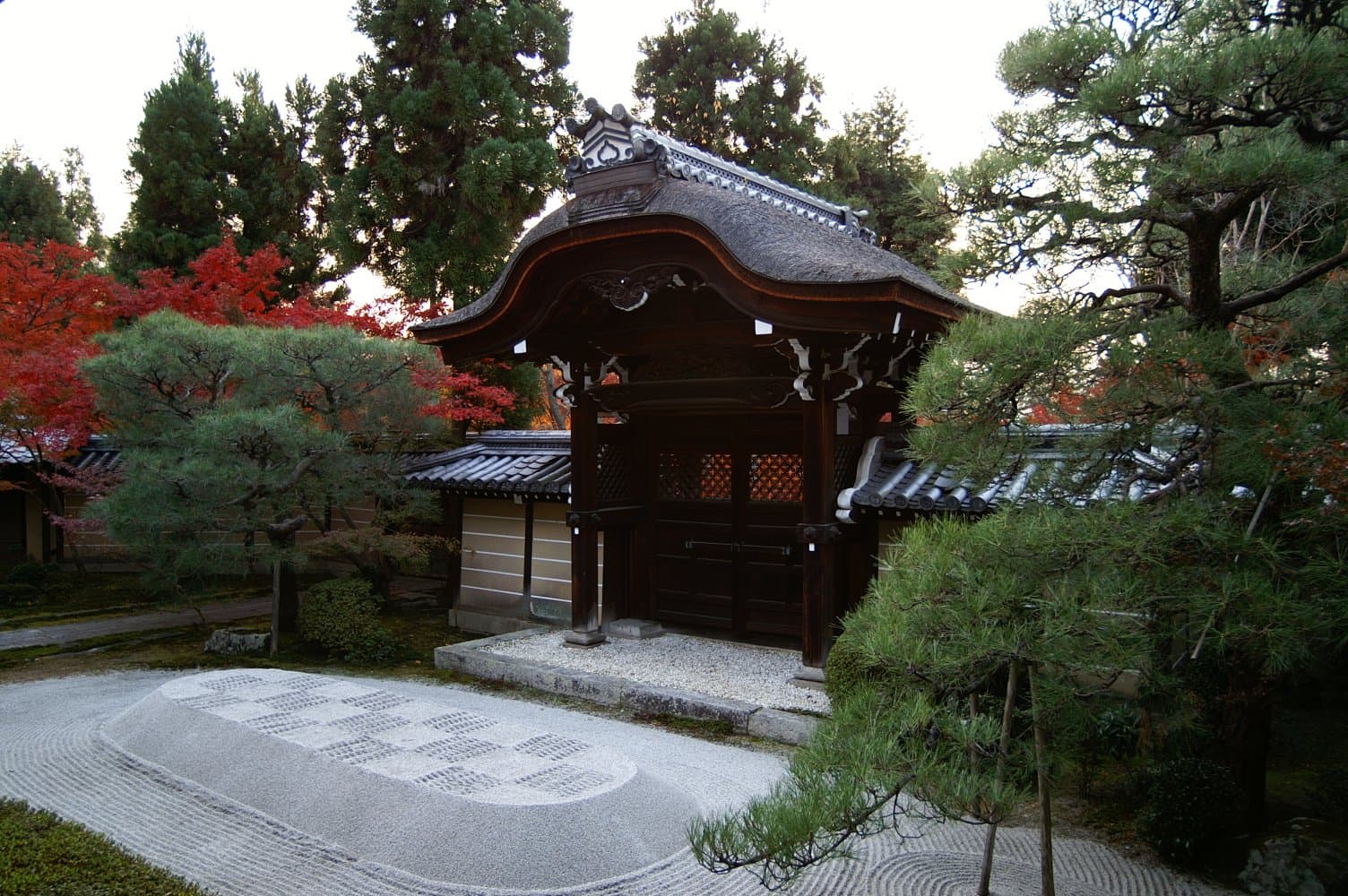
Known historically as "Momiji no Eikan-dō" (Eikan-dō of the Maples), this temple is the heavyweight champion of autumn. With over 3,000 maple trees, the density of color here is overwhelming. The Hojo Pond acts as a mirror, doubling the world and blurring the line between the reality above and the reflection below.
The Spiritual Angle: Walk the covered corridors that connect the halls. Notice how the architecture frames the chaos of the red leaves outside. It is a study in contrast, the stillness of the temple versus the wild transformation of nature.
Loading listing...
Tōfuku-ji: The Bridge to Heaven
The Tsūtenkyō Bridge ("Bridge Crossing Heaven") spans a valley filled with 2,000 maple trees. When you stand on it, you are floating above a sea of fire.
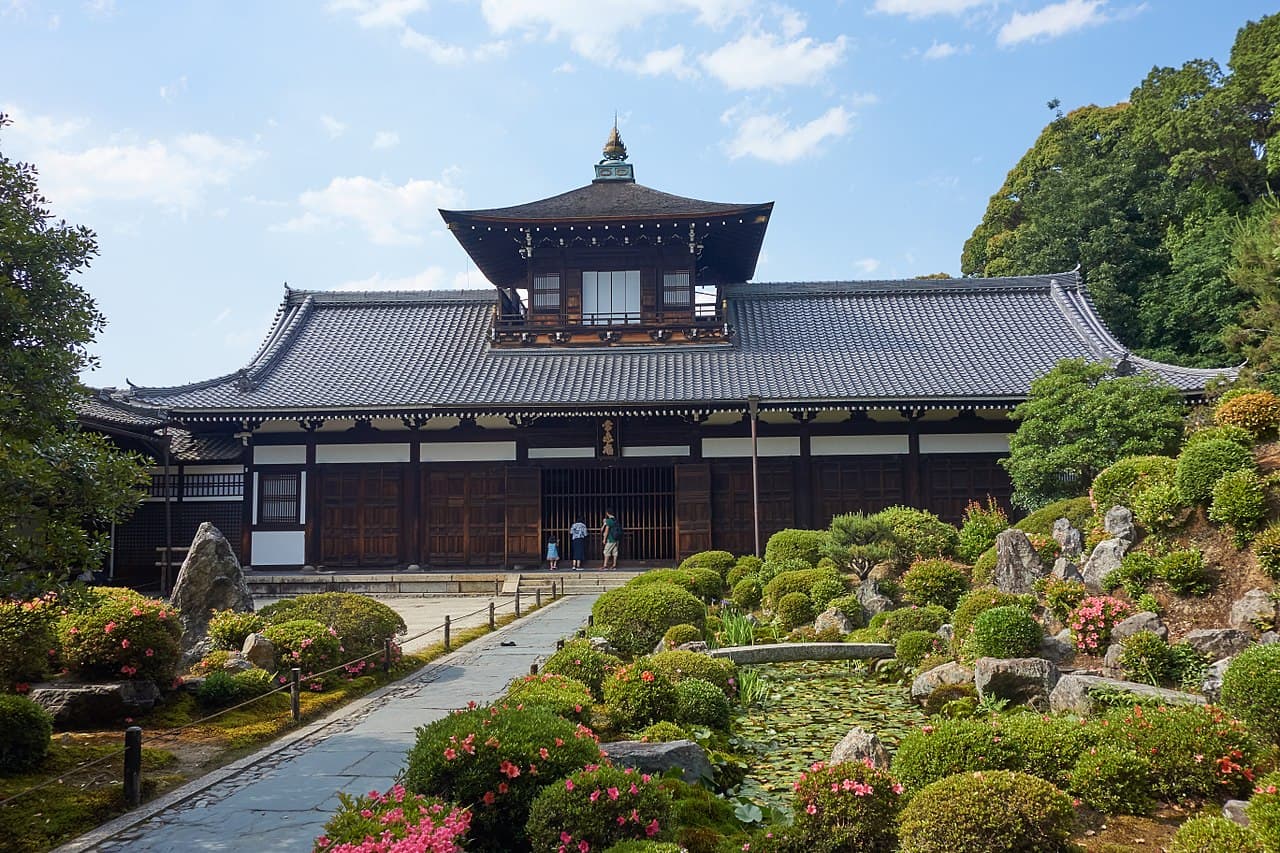
The Spiritual Angle: Visit the Hojo garden afterwards. It is a stark, dry rock garden representing the void. To move from the sensory overload of the bridge to the silent emptiness of the rock garden is to experience the full spectrum of Zen philosophy: form and emptiness, fullness and void.
Loading listing...
Kiyomizu-dera: The Celestial Stage
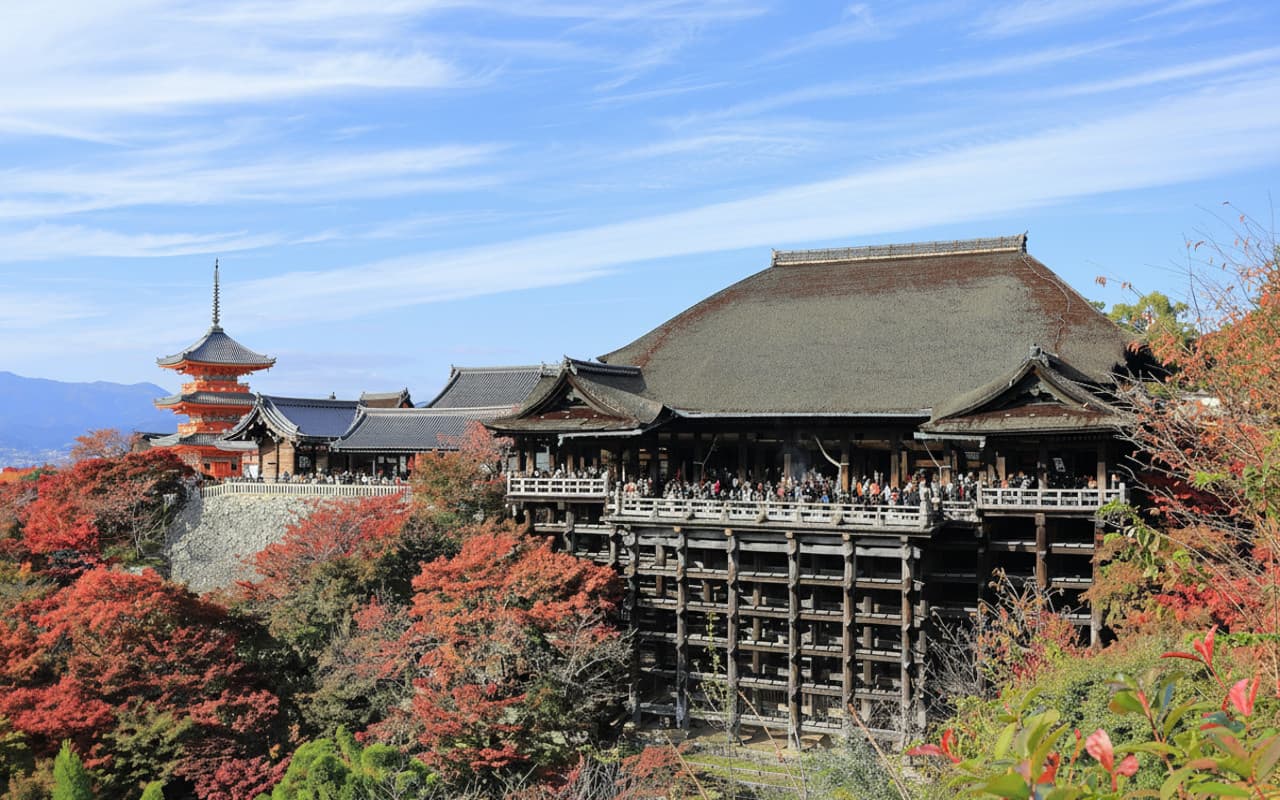
Perched on a hillside, the massive wooden stage of Kiyomizu-dera offers a view of the city drowning in a red tide.
The Spiritual Angle: At night, during the special illuminations, a single blue beam of light is projected from the temple into the night sky, representing the mercy of Kannon. Standing in the dark, surrounded by illuminated trees, the separation between the spiritual and the physical feels incredibly thin.
Loading listing...
A Pilgrim’s Guide to the Season
You want to experience the spiritual depth of momiji-gari, but you also have to deal with the reality of 50,000 other people trying to do the same thing. Here is how to navigate the season with your soul intact.
1. Timing is Everything
The peak usually hits mid-to-late November. However, climate change is pushing this later. Watch the forecasts.
- Northern Mountains (Takao, Ohara): Peak early (early Nov).
- City Center: Peak later (late Nov/early Dec).
2. The Early Morning Rule
If you go to Tōfuku-ji at 11:00 AM, you are not hunting maples; you are hunting for oxygen in a crush of bodies.
- Be at the gate by 7:00 AM.
- The silence of the morning is essential for the contemplative experience.
- Most temples open around 8:30 or 9:00 AM, but queuing early allows you to be the first one in the garden.
3. The Night Illuminations
Many temples light up their trees at night. It is spectacular, but it can feel like a theme park.
- Pro Tip: Go for a late dinner and visit the night illuminations after 8:00 PM (most close around 9:00 or 9:30 PM). The crowds thin out significantly in the last hour.
4. Find the Quiet
The famous spots are famous for a reason, but the "hunting" is often better in the shadows.
- Shinnyo-dō: A stunning temple near Eikan-dō that gets a fraction of the crowds.
- Konkai Kōmyō-ji (Kurodani): A massive complex with a hillside graveyard that offers poignant views of life and death amidst the foliage.
The Practice of Just Looking
When you finally find your spot, maybe a mossy corner in a sub-temple of Nanzen-ji, or a bench overlooking the Arashiyama mountains, put the camera down.
We are conditioned to consume beauty, to capture it and keep it. But momiji-gari asks you to let it go. Look at the leaf. Notice the veins, the gradient of green to red, the dry curl of the edge. Acknowledge that this leaf will be mud in a week. Acknowledge that this moment will never happen again.
In that acknowledgment, there is a strange kind of peace. It is the peace of knowing you don't have to hold on. The leaves are falling. Let them fall.