If you check Instagram, Arashiyama is a single, narrow path lined with towering bamboo. It is usually clogged with tourists eating matcha soft-serve. It looks like a theme park for nature lovers.
But if you strip away the selfie sticks and look at the history, Arashiyama reveals itself as something far more profound. For a thousand years, this district on the western edge of Kyoto has been a "Sacred Convergence." It is a place where the rigid discipline of Zen Buddhism meets the wild, animistic spirit of Shinto nature worship.
The aristocrats of the Heian period didn't come here just for the view. They came because they believed the mountains were alive. Today, despite the crowds, that spiritual pulse is still beating. You just have to know where to listen for it.
The Dragon and the Pond: Tenryuji Temple
The heavyweight champion of Arashiyama is Tenryuji Temple. Founded in 1339 by the shogun Ashikaga Takauji, it was built for a very specific, very Japanese reason. He needed to appease the angry ghost of an Emperor.
Takauji had driven Emperor Go-Daigo out of Kyoto. When the Emperor died, the shogun was terrified of vengeful spirits. To make amends (and buy spiritual insurance), he built Tenryū-ji. It became the head temple of the Rinzai Zen sect and holds the top rank among Kyoto’s "Five Mountain" temples.
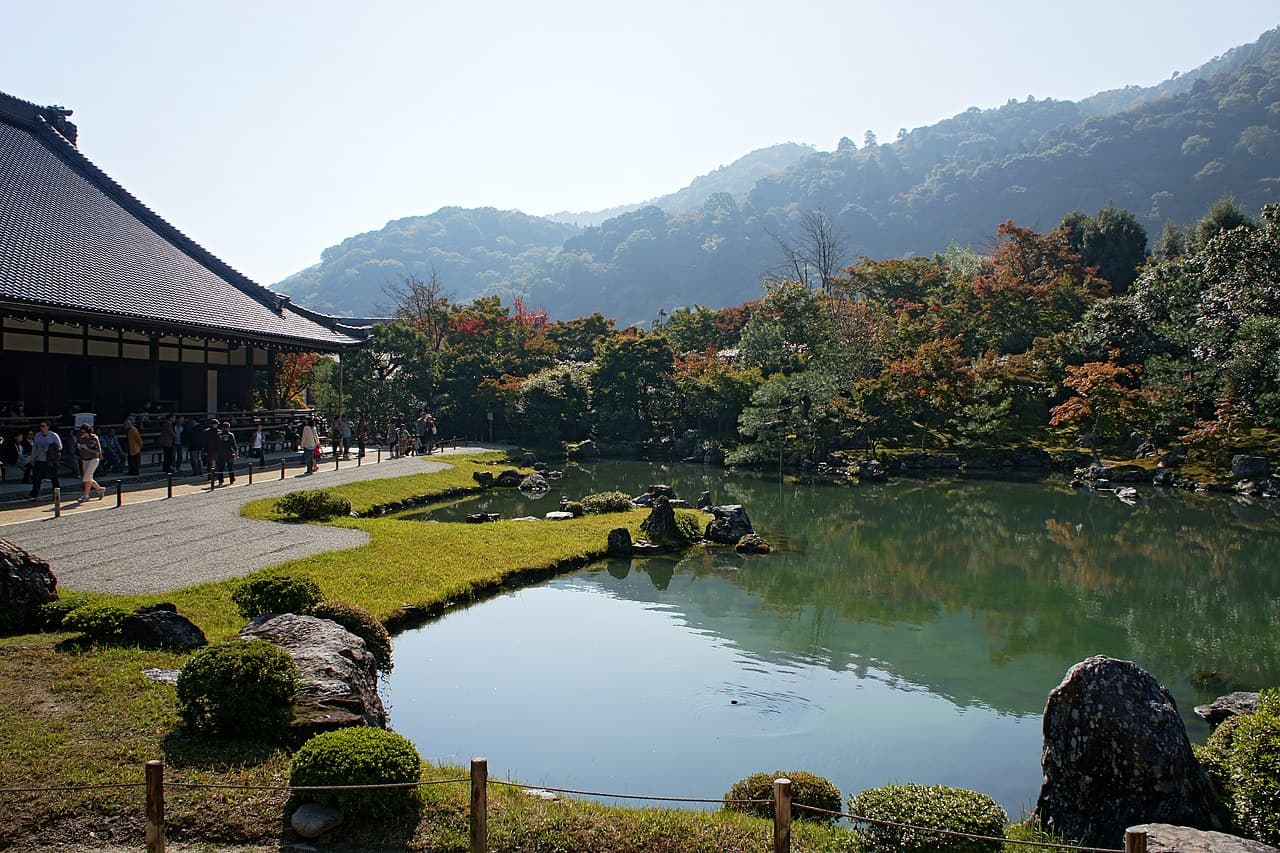
The real miracle here is the Sogenchi Pond Garden. Designed by the monk Muso Soseki almost 700 years ago, it remains virtually unchanged. It is a masterpiece of shakkei, or "borrowed scenery." The garden uses the Arashiyama mountains in the background as a visual element. It blurs the line between the man-made pond and the wild peaks. It is a Zen trick. Where does the garden end and nature begin? The answer, of course, is that there is no separation.
Loading listing...
The Shinto Spirit of the Forest
While Tenryū-ji dominates the Buddhist landscape, the Shinto roots of Arashiyama run deep into the soil.
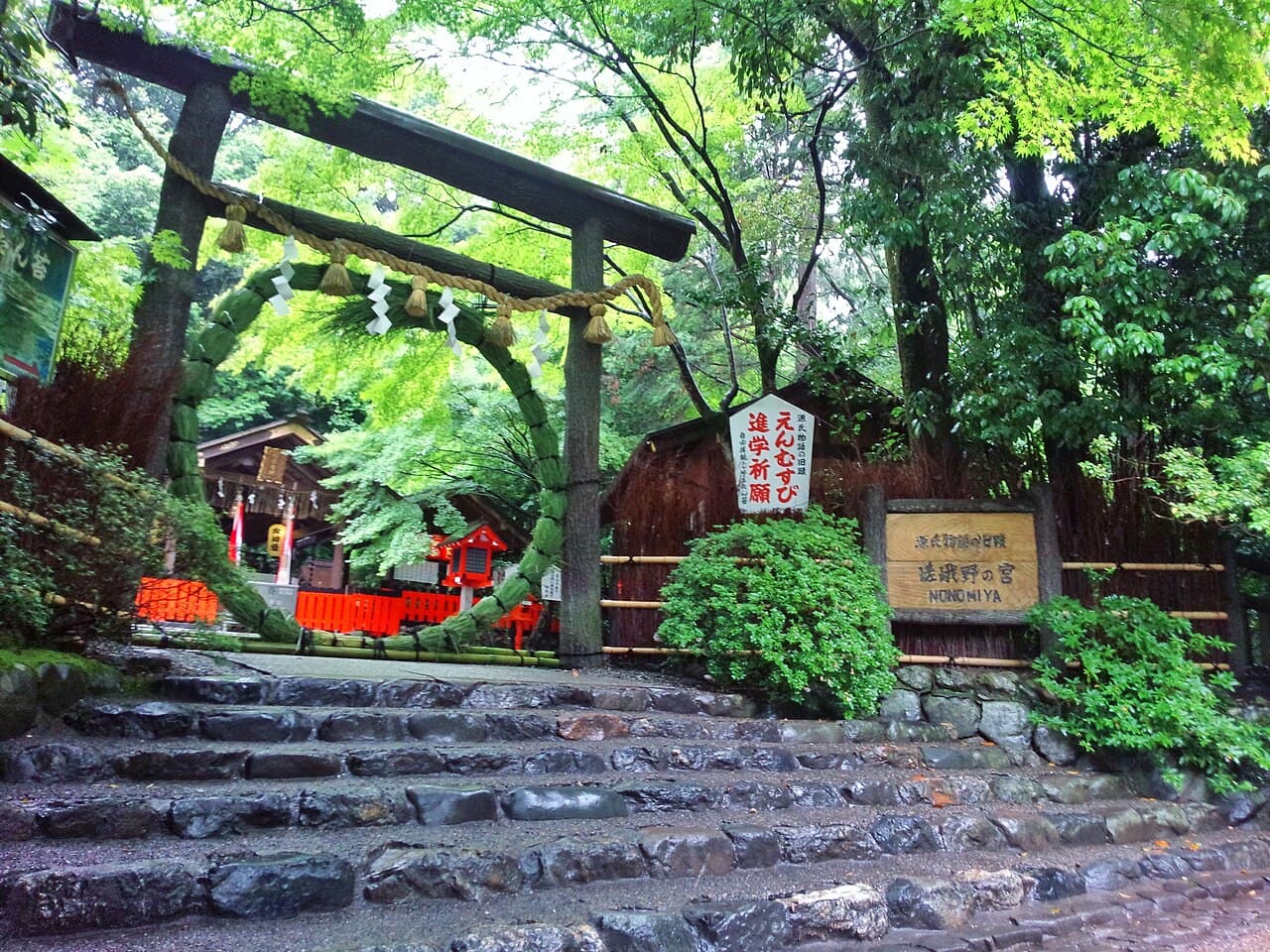
Tucked within the famous bamboo grove is Nonomiya Shrine. It looks modest. You see a black torii gate and some mossy grounds. But its history is imperial. In ancient times, when a princess was chosen to serve as the high priestess at Ise Shrine (the most sacred spot in Shinto), she would come here first to purify herself for a year. It was a place of spiritual detox.
Today, it is famous for matchmaking. But even if you aren't looking for love, stop to appreciate the "Black Torii" (Kuroki Torii). Unlike the bright orange gates you see elsewhere, this one is made of unpeeled oak logs. It has a raw, primal feel that connects directly to the ancient forests.
Loading listing...
The Bamboo Grove: More Than a Photo Op
The Arashiyama Bamboo Grove is the district's poster child. But why bamboo?
In Japan, bamboo is a symbol of resilience. It bends but doesn't break. In Zen philosophy, it represents the "fullness of nothingness." It is strong because it is hollow. It grows around emptiness.
Historically, this grove was more than scenery. It was a retreat. Zen monks used the sound of the wind rustling through the stalks as a focal point for meditation. The Japanese government has even designated the sound of this forest as one of the "100 Soundscapes of Japan."
Traveler Tip: To feel the spiritual weight of the grove, you must go early. At 7:00 AM, the path is empty. The air is cool. The "soundscape" is audible. At 11:00 AM, the only soundscape is the chatter of 5,000 people.
The Bridge to the Moon
Connecting it all is the Togetsukyo Bridge ("Moon Crossing Bridge"). Spanning the Katsura River, this wooden-looking (but actually reinforced concrete) bridge is the gateway to Arashiyama.
The name comes from Emperor Kameyama. During a boating party hundreds of years ago, he remarked that the moon looked like it was crossing the bridge from one side to the other. It is a poetic reminder that in Arashiyama, the landscape was always meant to be viewed with a sense of awe.
A Rite of Passage: The 13-Year-Old’s Test
There is a local ritual called Jusan-mairi that captures the magic of this place perfectly. When local children turn 13, they dress in kimono and visit Horinji Temple to pray for wisdom.
But there is a catch. After they receive their blessing, they must cross the Togetsukyo Bridge to return home. The rule is absolute. Do not look back. If the child turns around before crossing the river, legend says the wisdom returns to the temple. It is a beautiful, terrifying metaphor for growing up. You must move forward. You must leave childhood behind, with your eyes fixed on the future.
Loading listing...
How to Visit Like a Pilgrim
- Start early (around 8:45 AM) on the south side of the Oigawa River and head for Horinji Temple. Pay your respects to receive wisdom and take in the view from the observation deck.
- Walk across the Togetsukyo Bridge toward the main town (north). Crucial: Do not look back toward the temple until you have fully crossed the bridge to ensure you keep your wisdom.
- Head to Tenryū-ji and enter the garden. Walking through the Zen landscape early helps you avoid the largest crowds.
- Exit the north gate of Tenryū-ji. This drops you directly into the bamboo grove. Follow the path as it winds uphill.
- At the end of the main bamboo path, stop at Mikami-jinja, Japan’s only shrine dedicated to hair, located right next to the small pond (Ogura-ike).
- Visit Jōjakkō-ji or Giō-ji (the moss temple) further north. They are quieter, greener, and feel worlds away from the main strip.